10th Circuit Clears $600 Million Gross Dam Expansion, Ending Legal Fight Over Denver Water's Climate-Facing Reservoir
A 10th Circuit appeals court has unanimously cleared Denver Water's $600 million Gross Dam expansion, lifting an injunction and ending the legal fight over permits that environmental groups challenged on climate grounds.
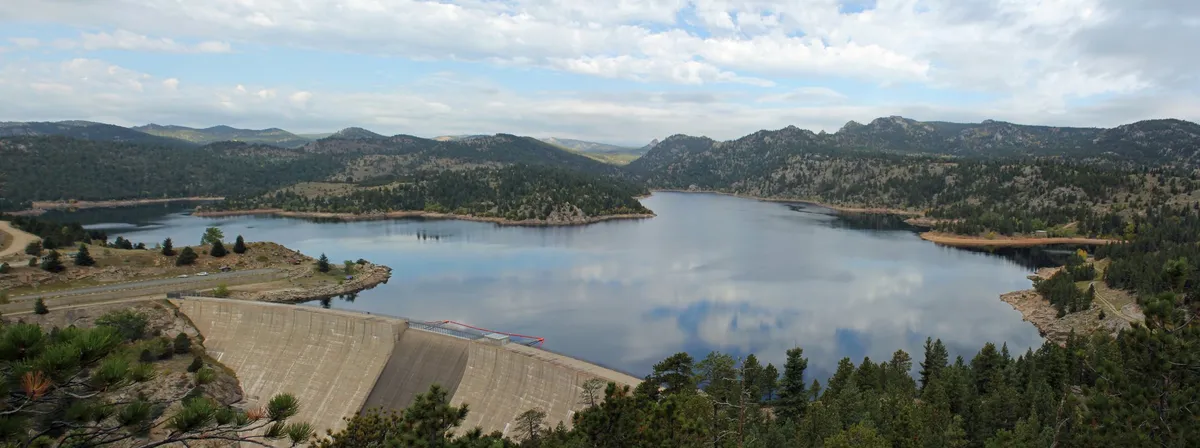

A unanimous three-judge panel of the 10th U.S. Circuit Court of Appeals ruled on September 15 that the U.S. Army Corps of Engineers lawfully issued permits for Denver Water’s $600 million Gross Reservoir expansion, lifting a lower court injunction that had blocked one of Colorado’s largest active water infrastructure projects. The court found the Corps reasonably concluded it could not quantify the impact of climate change on the expanded reservoir — a determination that satisfied the deferential review standard federal courts apply to agency environmental assessments.
The expansion will raise Gross Dam 131 feet and triple the reservoir’s storage capacity to 120,000 acre-feet. Once completed, Denver Water will be able to pull an additional 77,000 acre-feet of water from the Colorado River system — staggering those withdrawals across wet and dry years to buffer against streamflow variability driven by climate change.
Environmental groups challenged the permits on climate grounds, arguing the Corps failed to account for how global warming would alter the Colorado River flows that feed the reservoir. The 10th Circuit disagreed, finding the agency’s assessment legally sufficient even without precise climate projections. And with Save the Colorado director Gary Wockner confirming the plaintiffs will not seek Supreme Court review, the litigation is now over.
The underlying tension here is structural. The court upheld permits for a project that will divert more water from a river system already straining under decades of over-allocation and a two-decade megadrought — the Colorado River supplies 40 million people across seven states, and the basin has been in crisis for years. Denver Water’s answer to that same climate instability is to build a bigger reservoir, reasoning that increased storage capacity lets it ride out variability more effectively. The plaintiffs’ answer is that no amount of storage makes sense if the river being tapped doesn’t have the water to fill it.
The 10th Circuit didn’t resolve that argument. It resolved the narrower question of whether the Corps followed the right process when it issued the permits, and the unanimous panel concluded it did. That the agency couldn’t quantify climate change’s effect on the reservoir wasn’t, in the court’s view, a failure of analysis — it was an honest acknowledgment of uncertainty that current science couldn’t resolve.
For Denver Water, the ruling means years of planning and hundreds of millions in committed spending can move forward without further legal delay. For the environmental groups, it closes a chapter they’d hoped would end differently, though Wockner’s decision not to appeal signals a recognition that the legal strategy had reached its ceiling.
Whether the expanded reservoir will actually prove useful depends on how the Colorado River’s future unfolds — a question the court was right to say nobody can yet answer with precision. What’s notable is that the same uncertainty that made it impossible to block the project on climate grounds also makes it impossible to guarantee the project will deliver the water security Denver Water is counting on.