Retired Wind Turbine Blades Now Carry Footbridge Loads in the U.S.
A decommissioned wind blade used to span a creek in Atlanta demonstrates how retired composite turbine materials can be structurally repurposed for U.S. civil infrastructure.
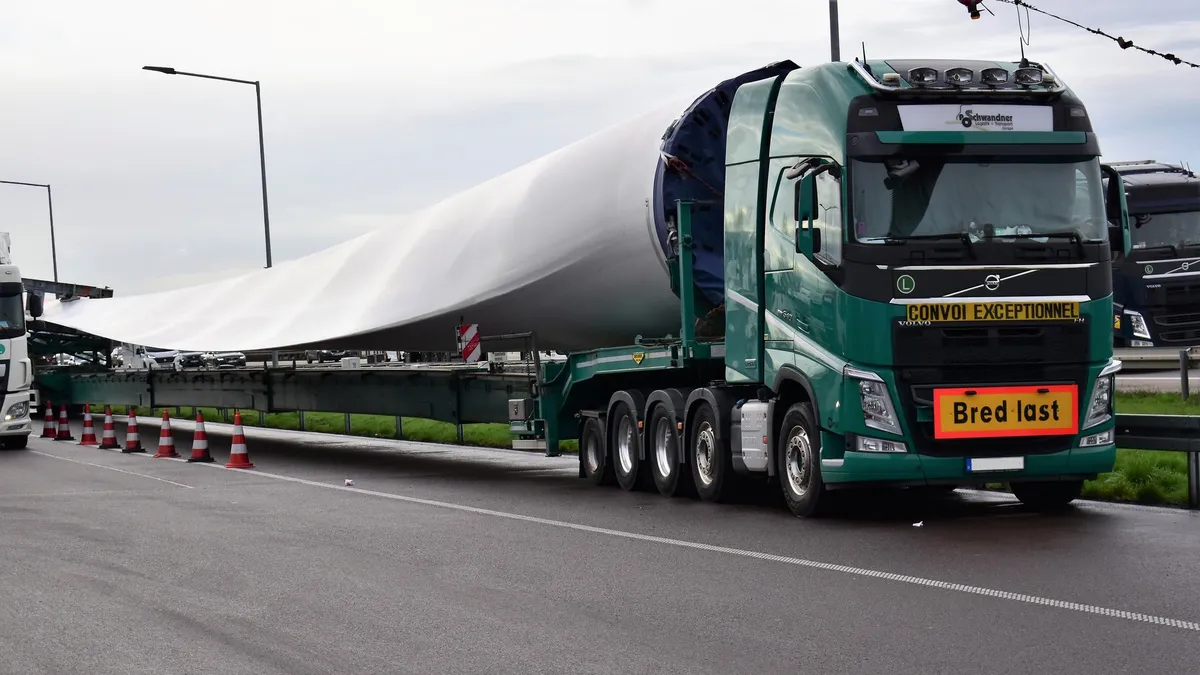

The first U.S. footbridge constructed from a decommissioned wind turbine blade is now in use in Atlanta, marking a practical shift in how civil engineers approach retirement pathways for massive composite structures. A retired forty-nine-foot spar cap from a Colorado wind farm was deployed in Beaverbrook Park to span a creek, transforming the site and opening nearly two acres of previously unreachable green space to visitors. Georgia Tech and partner institutions, funded entirely by the National Science Foundation, spearheaded the structural integration of the blade after deriving usable engineering values from furnace burning, pull, crush, and four-point bending tests to compensate for the complete absence of manufacturer datasheets.
The material itself survived its primary function well enough to carry structural loads in a second act. Researchers at the University of Houston who tested spar caps from decommissioned GE37 blades supplied by Carbon Rivers found that the glass-fiber-reinforced polymer composites retained remarkable mechanical properties after years of service, demonstrating that retired turbines can be structurally reused rather than recycled as bulk civil engineering material. That retention of strength is what allows components like wing spars to be repurposed for load-bearing infrastructure without requiring the intensive industrial processing traditionally demanded of composite waste streams.
Atlanta’s installation is actually the third such turbine-blade bridge constructed globally, following precedent set in Ireland that demonstrated both structural reliability and environmental payoff. An earlier footbridge built from two blades in County Cork demonstrated a twenty percent carbon reduction compared to equivalent steel girders, while an independent test bridge in Draperstown successfully held its target design load of roughly seventy-eight thousand pounds without failure during controlled loading tests. The successful translation of these components into civil infrastructure points directly toward a more sustainable form of upcycling for materials that would otherwise be sent straight to landfills or downcycled into low-value concrete fill.
Engineering the reuse of turbine blades requires treating retired wind farms as material banks rather than demolition sites. Civil engineers have to reverse-engineer safety factors through empirical testing because manufacturers never publish load-bearing specifications for decommissioned airfoils, forcing structural calculations to start from scratch once a blade hits retirement age. Once those values are locked in, the blade functions not as a novelty but as a standard girder substitute, solving specific right-of-way constraints while quietly extending material lifecycles by decades.
The project signals a practical pathway for municipalities managing two converging infrastructure legacies: aging transportation corridors and aging renewable energy installations. Rather than treating retired multi-ton spars as composite waste, engineers are systematically mapping where those exact spans intersect with civil design requirements. If municipal procurement begins matching blade supply chains to bridge specifications instead of relying exclusively on conventional steel or concrete, the volume of retired turbine material entering landfills will drop, and public infrastructure will carry a fraction of that upfront embodied carbon.