Russia and North Korea open first road bridge across their shared border
The Yakov Novichenko Bridge over the Tumen River, a one-kilometre, two-lane crossing, opened on September 7, 2026, replacing wooden planks laid on the existing rail bridge.
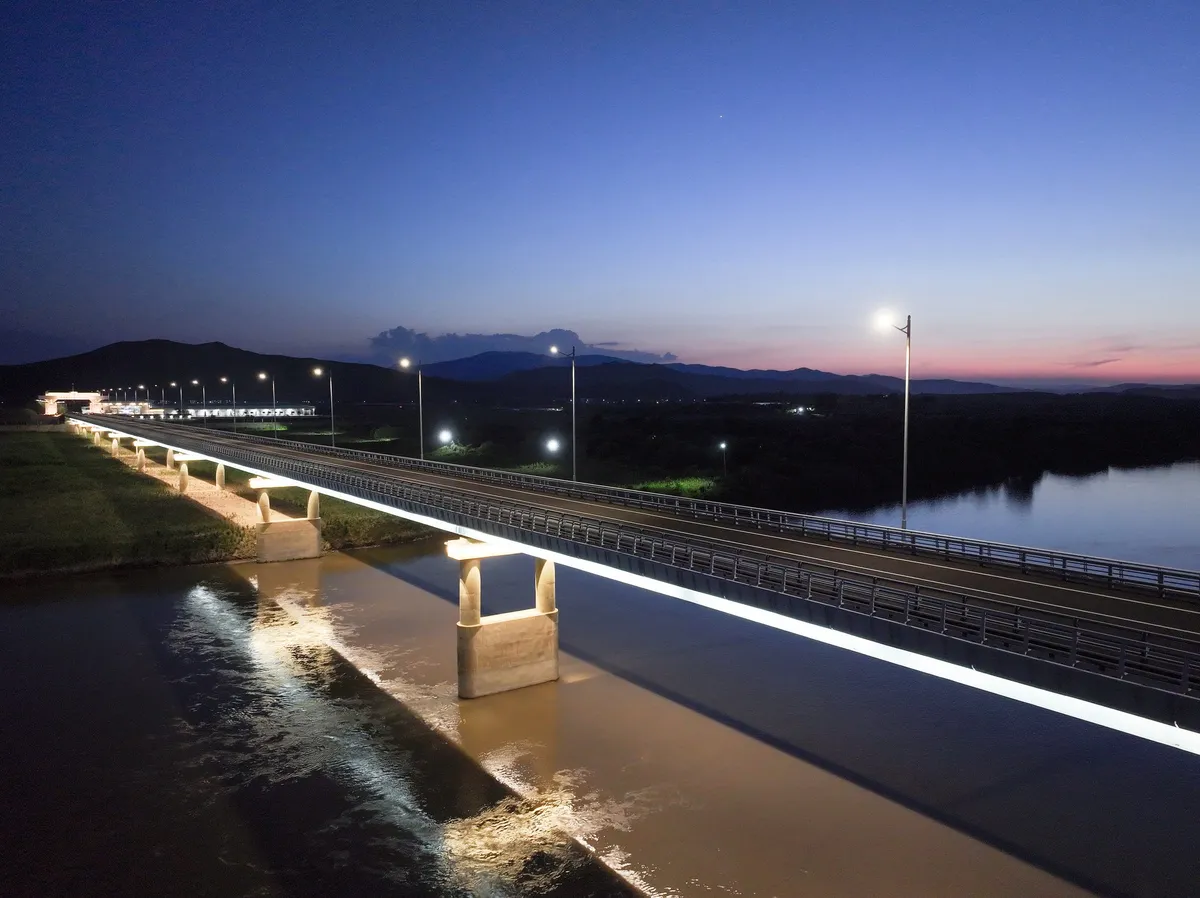

On Monday, September 7, 2026, Russia and North Korea opened the first purpose-built road bridge across their shared border. The one-kilometre, two-lane crossing spans the Tumen River between Khasan in Russia’s Far East and the North Korean settlement of Tumangang, and on opening day convoys of vehicles rolled across from both sides after a video-linked ceremony attended by Russian Prime Minister Mikhail Mishustin and his North Korean counterpart Pak Thae Song.
The bridge is named after Soviet officer Yakov Novichenko, and the geography of what it actually connects is slightly more specific than some of the early coverage suggested. The BBC framed the opening as linking “the border cities of Rason and Khasan,” a shorthand that groups Tumangang into the broader Rason special economic zone it serves. The Guardian’s reporting identified the North Korean end more precisely as Tumangang itself, the actual border settlement on the river, with the Yakov Novichenko Bridge feeding traffic into the Rason zone from there. Either way, the construction story is the same: a fixed road link where, until now, there was essentially none.
What the bridge replaced is worth pausing on. The previous road crossing between the two countries was a makeshift arrangement of wooden planks laid on top of the existing rail bridge, according to the BBC’s account of the opening — functional, but hardly the kind of infrastructure that suggests either side expected the relationship to deepen. The new bridge took 495 days to build after construction began on April 30, 2025, and is designed to handle up to 300 vehicles and around 2,323 people a day, figures the BBC pulled from the project documentation. For context, that’s a meaningful artery rather than a symbolic gesture: enough capacity to move freight and people at a scale that the old plank-on-rail workaround plainly could not.
The rhetoric at the ceremony was the kind both governments tend to reach for on these occasions, but the framing on each side is still worth noting. Mishustin called the bridge “a new symbol of friendship,” while Pak Thae Song described it as “a historical event” — quotations both outlets carried from the video-linked opening. That language matters less for what it says about engineering than for what it signals about intent: two governments that have spent the last few years drawing closer, both politically and militarily, putting a permanent piece of infrastructure across a border that has spent most of the post-Cold War era being deliberately difficult to cross.
The AP wire report that NPR carried filled in some of the same details independently: one kilometre long, two lanes, named for Yakov Novichenko, ceremony attended via video link by both prime ministers. That three-outlet convergence on the basic facts — length, capacity, name, dates — is itself the story, given how rarely coverage of cross-border projects on this frontier agrees on much beyond the existence of the project.
What the bridge will actually be used for, beyond the symbolism, is the open question. The 300-vehicle daily capacity is small in absolute terms but large relative to what the wooden-plank arrangement could move, and the structure is plainly engineered for steady cross-border freight and passenger traffic rather than the occasional diplomatic convoy. Both governments now have a piece of fixed infrastructure that commits them, at least physically, to keeping that traffic flowing. Whether the political relationship that produced the bridge outlasts the concrete is, as always with projects on this border, a separate question from whether the bridge itself does.