Expedition Reaches Nikumaroro in Search for Amelia Earhart’s Lost Plane
A 17-person expedition is beginning its search for a submerged object that could be Amelia Earhart’s Lockheed Electra, though experienced investigators believe it is a fallen pandanus tree.
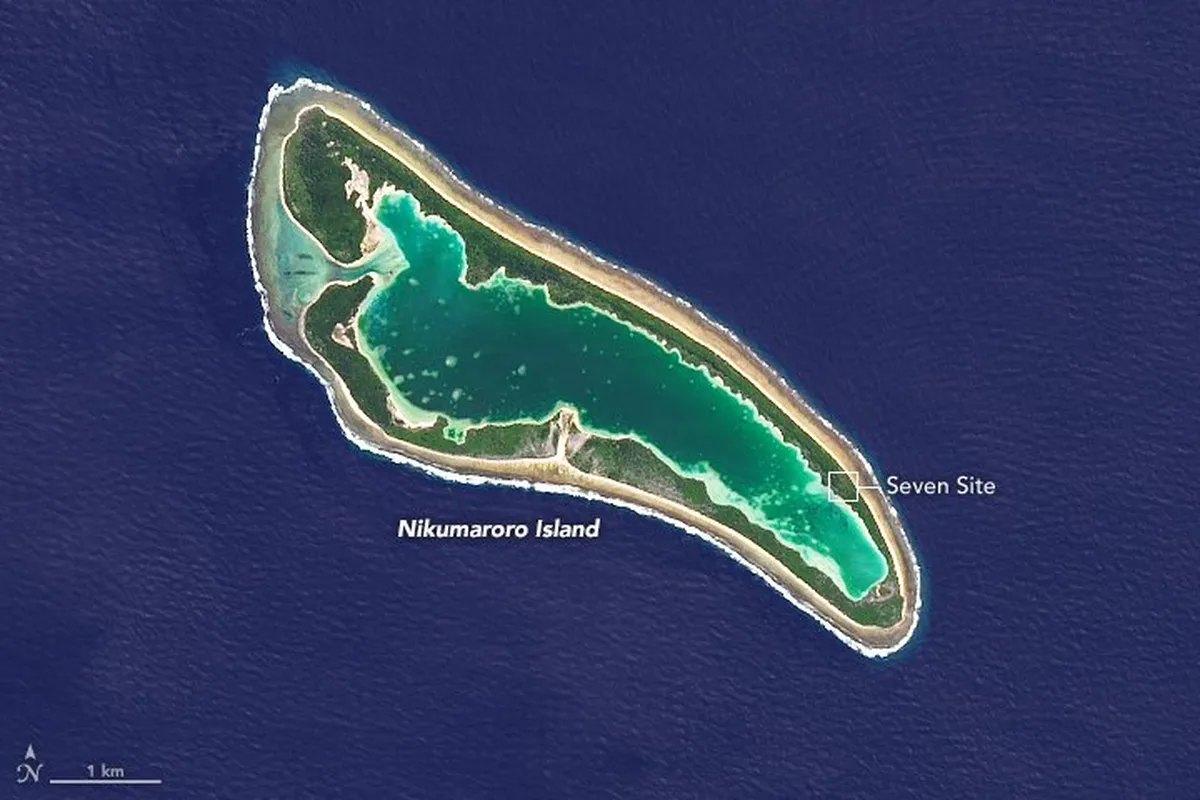

A 17-person research expedition is approaching Nikumaroro, Kiribati, after a six-day voyage to investigate a submerged object that the team suspects could be Amelia Earhart’s missing Lockheed Electra. The search will focus on the lagoon and the so-called Taraia Object, which the expedition believes may be the aircraft Earhart was flying when she disappeared.
The expedition departed Tarawa on October 7 aboard the Marin Mainiku, carrying the research team and the equipment needed to examine the object underwater. That includes side-scan sonar, a magnetometer, and hydraulic dredging tools for investigating the suspected aircraft, giving the crew several ways to search the lagoon and assess what is beneath the surface.
The expedition is now moving from a long sea journey into the part that can produce actual evidence: locating the Taraia Object, documenting its shape and position, and determining whether it has characteristics consistent with an aircraft. The equipment matters because the question is not simply whether something is visible underwater, but whether the submerged form can be mapped, detected as metal, and examined closely enough to distinguish an Electra from natural debris.
There is already a serious alternative explanation. Longtime Earhart investigators believe the object is a fallen pandanus tree, not a wrecked aircraft. That disagreement gives the search a useful clarity: the expedition is not approaching an undisputed discovery, but a specific object whose identity can be tested against competing interpretations.
Nikumaroro has therefore become the setting for a very narrow kind of historical investigation. The broader mystery surrounding Earhart is familiar, but the expedition is looking for something physical in a defined place, using instruments designed to reveal what cannot be reliably identified from the surface. If the object is the Electra, the search could connect the submerged shape to one of aviation’s most enduring disappearances. If it is a tree, the result would be less dramatic but still valuable: one more promising lead removed from the list.
For now, the expedition has reached the point where speculation has to give way to the lagoon itself. A 17-person team, after six days at sea, is about to find out whether the Taraia Object is an aircraft hidden underwater or exactly what its critics say it is: a fallen pandanus tree.