SNAP cuts cascade into school cafeterias, ending universal free meals after over a million children lose benefits
SNAP eligibility cuts are forcing schools that relied on it to qualify for universal free meals to end those programs.
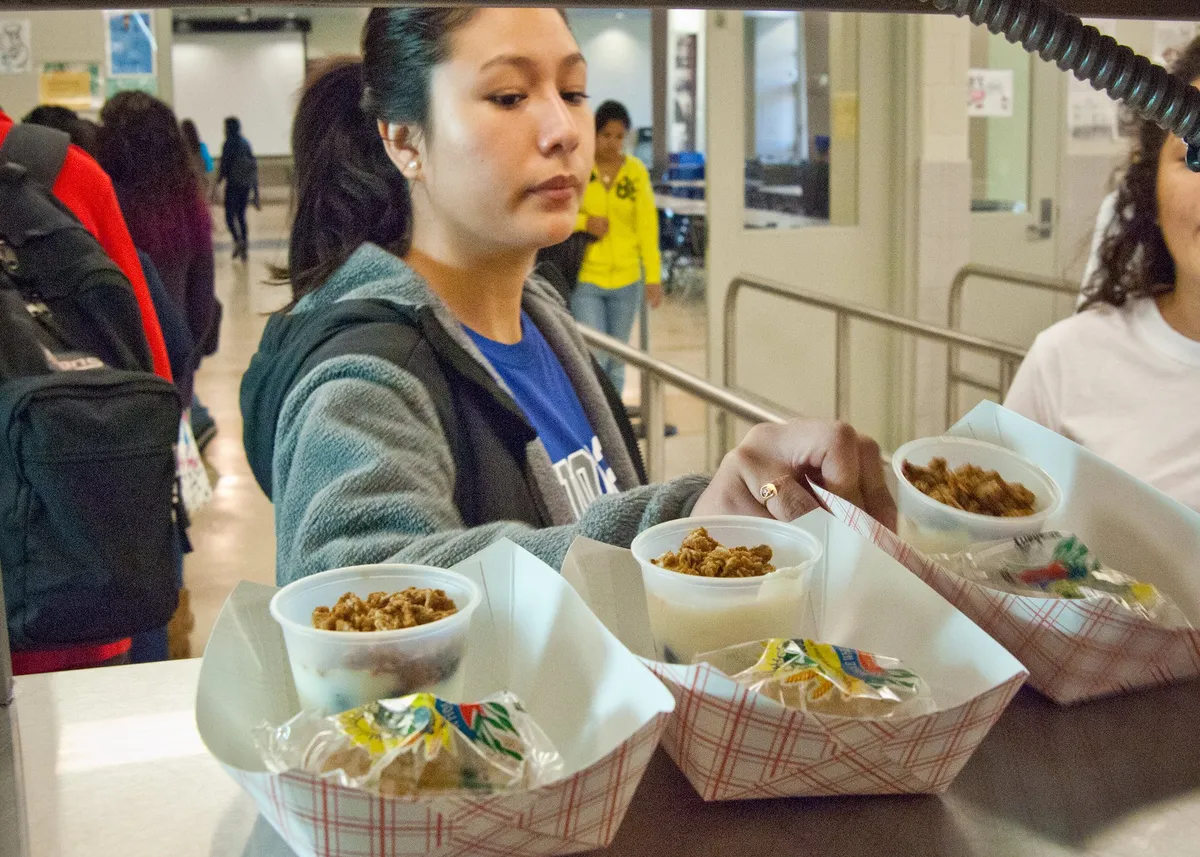

Since July 2025, over a million children have lost benefits under the Supplemental Nutrition Assistance Program as changes from the One Big Beautiful Bill Act take effect, and the consequences are now cascading into school cafeterias. The federal Community Eligibility Provision, which funds universal free breakfast and lunch programs, relies on SNAP enrollment data to determine which schools qualify. As families are removed from SNAP rolls, thousands of campuses are losing their eligibility for these meal programs.
The shift is already measurable in specific districts. Dozens of schools in San Antonio, Houston, and Miami-Dade County have ended universal free meal programs as a direct result. In Miami-Dade, where SNAP enrollment in Florida has dropped nearly 20 percent, the district has already terminated its district-wide free meals offering. These are not hypothetical future cuts—children in these areas are seeing the change in their daily routine now.
The financial burden is shifting directly onto families. For a household with two children, the loss of free school meals plus reduced SNAP assistance could translate to an additional $2,200 in annual food costs. The broader scale of the potential impact is significant: the Urban Institute estimates that about 18.3 million students could ultimately lose access to free school meals nationwide due to the ongoing SNAP changes.
Experts view the current situation as an early signal, not the full picture. The School Nutrition Association has warned this could be a tip-of-the-iceberg scenario, with millions more students potentially affected in the coming years as the provisions of the One Big Beautiful Bill Act continue to roll out. Approximately 4.5 million people, including 1.5 million children, have already lost food stamp benefits since the Act’s passage.
The mechanics of the link between SNAP and school meals mean the effect is indirect but deterministic. Schools don’t apply to lose their Community Eligibility Provision status; they lose it automatically when the percentage of students receiving SNAP benefits falls below a specific threshold. This creates a system where federal anti-poverty policy changes in one program directly and unavoidably alter the availability of a service in another, affecting children’s daily nutrition as a secondary consequence.
For the districts already impacted, the policy shift means reintroducing school lunch debt, cash registers in the lunch line, and administrative tracking of individual family applications—systems the universal model was designed to eliminate. For the districts still on the threshold, the coming months will be a waiting game to see whether their enrollment numbers change again. The core question isn’t whether the policy is working as written, but whether the downstream effects on child nutrition were fully anticipated before it was set in motion.