Fire destroys restaurant and apartments in Swiss Alpine town of Thusis, five missing and eight injured
A fire in the Swiss Alpine town of Thusis destroyed a restaurant with apartments above it overnight on 21 August 2026, leaving five people missing and feared dead and eight others injured, with nearly 100 firefighters called in from four area departments after the stairwell collapsed and forced a crane-led roof entry.
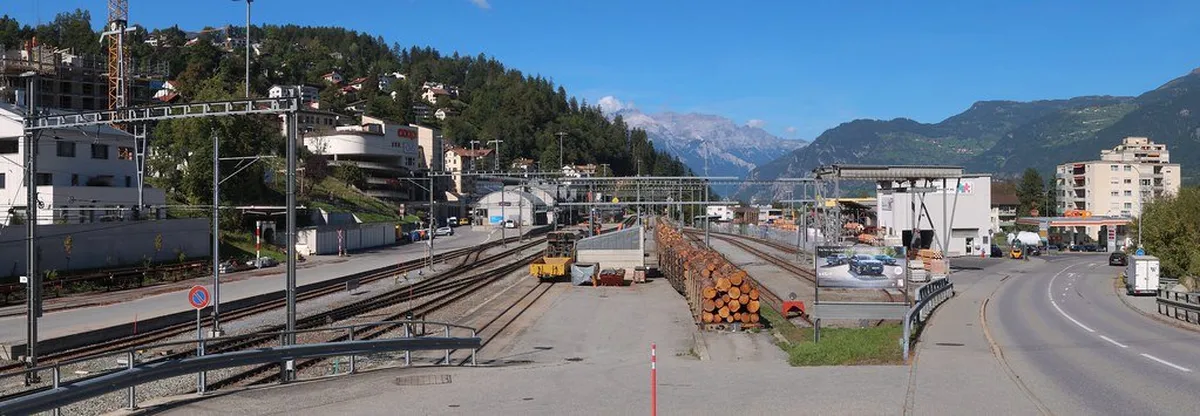
Just after midnight on 21 August 2026, a restaurant with residential apartments above was “completely destroyed” by fire in the Swiss alpine town of Thusis, a small Graubünden municipality whose old town sits in a narrow stretch of the Alpine Rhine valley. Police were called shortly after the blaze broke out on the second floor, and within hours nearly 100 firefighters from four area departments were on the scene, working a structure whose roof had to be cut open with a crane after the internal stairwell collapsed and cut off the routes firefighters would normally use to reach the upper floors (BBC News reported the scale of the response and the crane operation, and UPI’s account confirmed the stairwell collapse and the same crane workaround).
By Friday morning, five people were unaccounted for and feared dead, and eight others had been injured — figures both outlets gave consistent shape to, with the BBC framing the building as “completely destroyed” and UPI characterizing the same structure as “razed,” an editorial choice that does the same work. The restaurant sat on the ground floor of a mixed-use building typical of small Swiss valley towns, where a ground-floor business with apartments stacked above is less a real-estate curiosity than a standard arrangement, which is part of why a fire that starts on the second floor in the middle of the night carries the particular risk it does: the people most exposed to it are the ones sleeping above it.
The collapse of the stairwell is the detail that turns this from a serious fire into a recovery operation. Once the internal means of reaching the upper floors was gone, firefighters could not get to the residential units in any ordinary way, and the roof had to be physically opened from above with a crane to give them access. Both sources describe the same sequence — the stairwell failed first, the crane was used to breach the roof — and it is the kind of access problem that explains why a fire that starts on a single floor in a multi-storey building can still produce a casualty count measured in the low double digits. The fire departments that responded drew from four surrounding services, which is itself a measure of how unusual an incident of this size is in a Swiss Alpine town of Thusis’s population.
What is not yet clear from the reporting is the condition of the five missing people. “Missing” in the immediate aftermath of a structural fire of this severity is a near-synonym for the worst-case outcome, but neither source is willing to put that in print yet, and the local police are still presumably working through identification and notification before any formal casualty figures are released. The eight injured have been accounted for, which leaves the five missing as the open question the next twenty-four hours of reporting will be built around. Until the building can be entered in anything resembling a normal way, the count of who was inside at the time of the fire is itself partly an inference — drawn from resident lists, restaurant bookings, and the people known to have been in the building overnight.
The structural fact underlying both numbers is the same: a fire that broke out on the second floor of a building with apartments above it, in the small hours, in a town whose volunteer and professional fire resources are scaled to ordinary valley incidents rather than to a fully involved mixed-use building. That mismatch — between the scale of what can go wrong in a residential building above a restaurant and the resources a small Alpine town can bring to bear in the first minutes — is not unique to Thusis, but it is the reason the rest of the night’s work is now being done with a crane rather than a hose.