Astronomers detect a wandering supermassive black hole after a star's destruction
A dormant supermassive black hole, found far from its galaxy's center, was revealed when it shredded a passing star.
.gif)
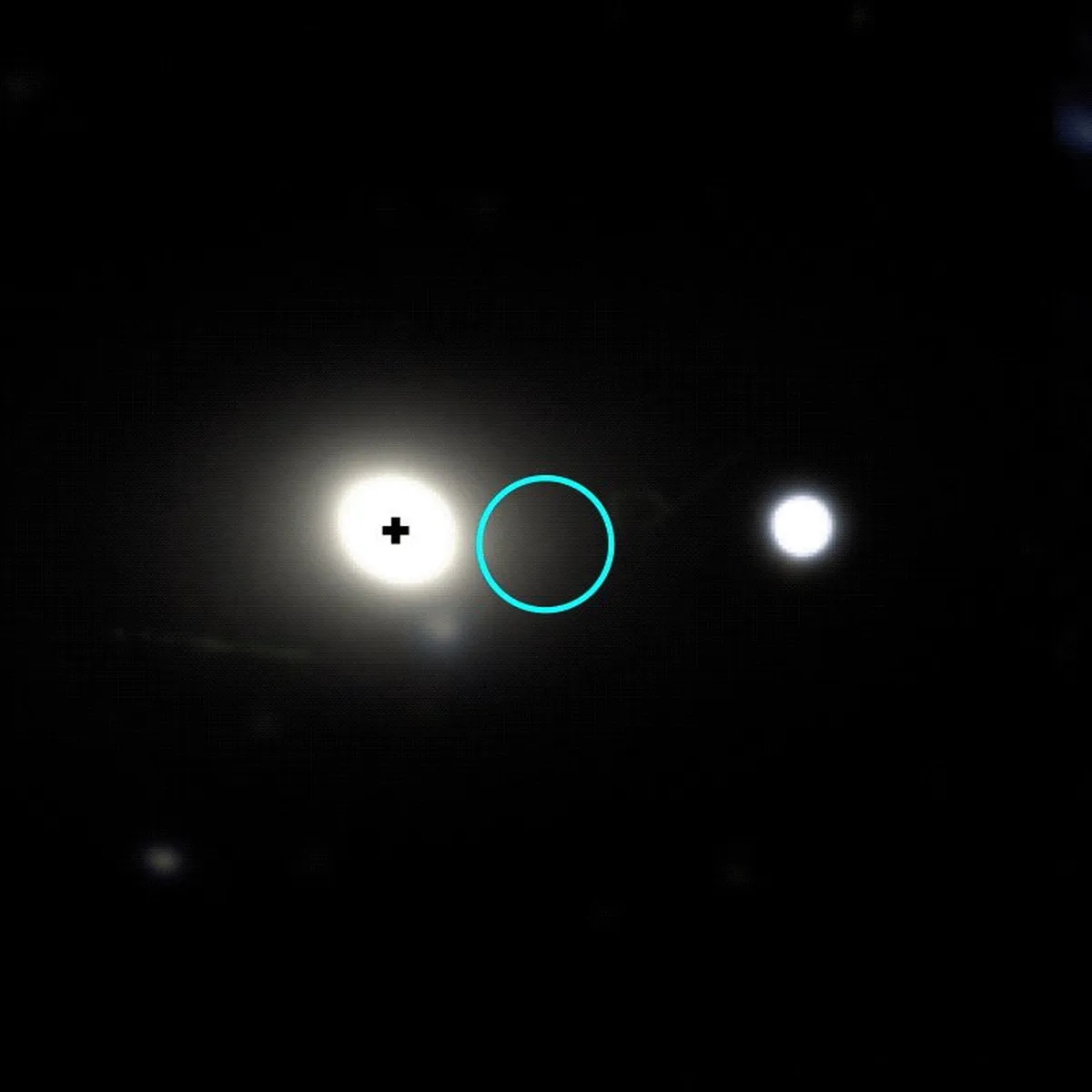
Astronomers have discovered a dormant supermassive black hole wandering 30,000 light-years from its galaxy’s center, the first time scientists have detected one so far from a galactic core. The find was made after the black hole shredded a passing star in what’s known as a tidal disruption event, a fleeting flash of light that exposed the otherwise hidden object on the outskirts of a faraway galaxy.
NASA’s Neil Gehrels Swift Observatory captured this ‘orphan’ black hole lighting up as it devoured the star, validating a new technique for finding otherwise invisible supermassive black holes that have wandered away from their galactic cores. The discovery, detailed by ScienceDaily, marks the first dormant black hole detected at such a large offset from a galaxy’s central region.
This specific event was spotted by University of Maryland astronomers, who observed the supermassive black hole lurking at the edge of its host galaxy. As reported by the university, the detection relied entirely on the brief, intense emission generated as the star was torn apart by the black hole’s gravity—a signature that would have been impossible to see if the star had not passed so close.
The technique offers a direct way to locate massive black holes that are not actively feeding and therefore emit no telltale radiation from their immediate surroundings. NASA’s coverage of the Swift observation notes that such wandering black holes have long been theorized but remained elusive because they are typically invisible without an external trigger like a stellar disruption.
Finding one this far from the galactic center challenges some assumptions about how supermassive black holes form and migrate. The 30,000-light-year distance suggests it could have been ejected during a galactic merger or may be the remnant of a smaller galaxy that was absorbed, leaving its central black hole stranded in the outskirts.
The event also provides a clean laboratory for studying the physics of tidal disruption. Because the black hole was isolated and dormant, the light curve from the destroyed star is not contaminated by emission from an existing accretion disk or jet, offering a clearer signal of the disruption process itself.
For now, the discovery remains a single data point, but it proves the method works. Astronomers expect more of these wandering giants will be found as time-domain surveys continue to scan the sky for similar flashes, building a census of black holes that have drifted from their expected posts.