JWST detects changing water clouds on nearby brown dwarf WISE 0855
James Webb Space Telescope observations provide the first direct evidence that water clouds outside our solar system change thickness as a brown dwarf rotates.
James Webb Space Telescope observations provide the first direct evidence that water clouds outside our solar system change thickness as a brown dwarf rotates.
A red dwarf called ZTF J0440+2325 is slowly pulling material from a brown dwarf companion, in a binary system so compact the smaller object orbits the larger every 87 minutes.
On 6 October 2026, the Royal Swedish Academy of Sciences awarded the Nobel Prize in Physics to Francis Halzen for decisive contributions to the IceCube Neutrino Observatory and the discovery of high-energy neutrinos of astrophysical origin.

The Crew-13 mission to the International Space Station marks the first time a NASA astronaut has flown twice on a SpaceX Dragon spacecraft.
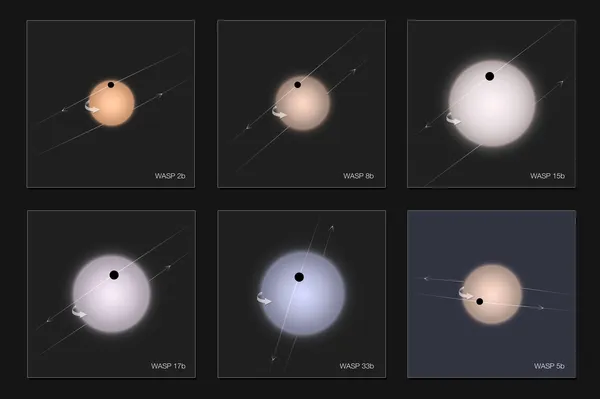
A sub-Neptune planet 73 light-years away orbits in the opposite direction of its small host star, challenging standard models of planetary system formation.
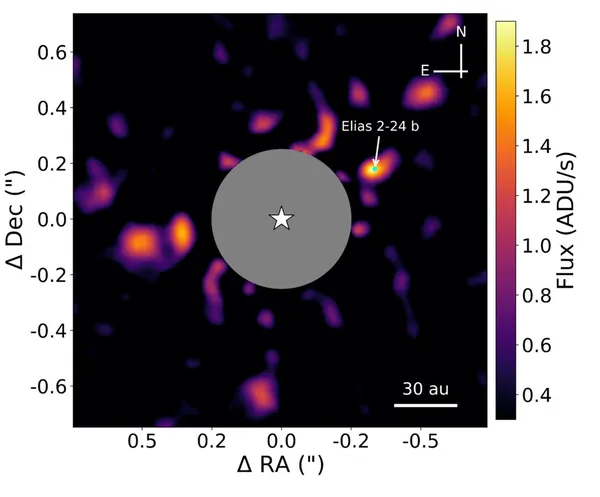
A Jupiter-size planet still gathering material from its natal disk challenges formation models with its rapid growth at 55 times Earth's orbital distance.
A German startup recovered from a 30-second launch failure to put Europe's first commercial orbital payload on its own vehicle from Western European soil.
After an eight-year voyage, the BepiColombo mission has entered its arrival phase at Mercury.
Hubble and James Webb teamed up for the first time to discover 27 small Trans-Neptunian Objects, revealing fewer tiny icy bodies than models predicted and surfaces as pristine as those of larger worlds.
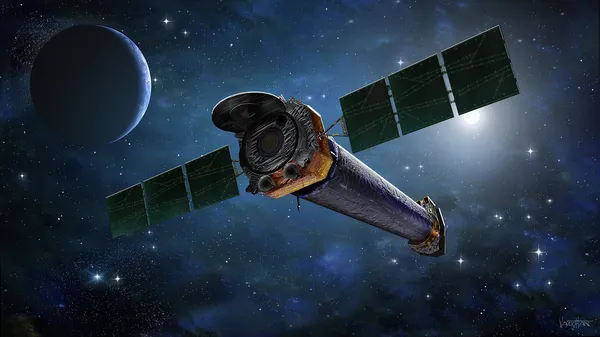
NASA's Chandra X-ray Observatory has detected a new class of compact binary systems that emit unusually low-energy X-rays and intense ultraviolet radiation, potentially resolving two long-standing astrophysical puzzles.
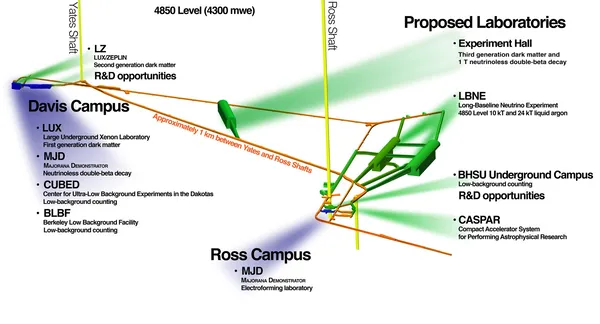
A single anomalous event in the LUX-ZEPLIN dark matter detector has reached 2.6 sigma, a tentative signal that falls well short of discovery and now awaits confirmation from other experiments.
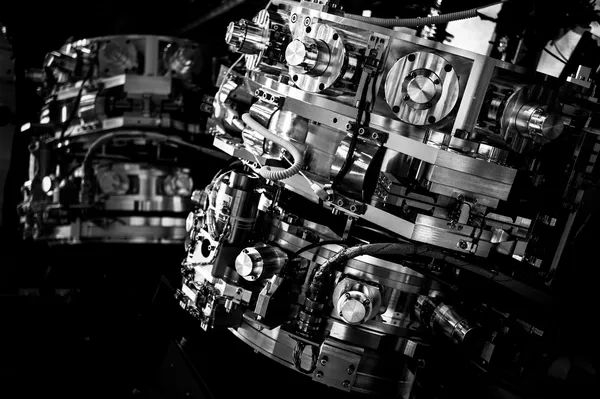
The new instrument can collect spectra from nearly 1,000 stars or galaxies at once, including targets hidden behind dust near the centre of the Milky Way.
After eight years and 9.9 billion kilometres of travel, BepiColombo has separated its Mercury Transfer Module and is now on final approach for orbital insertion around Mercury on November 21, 2026.
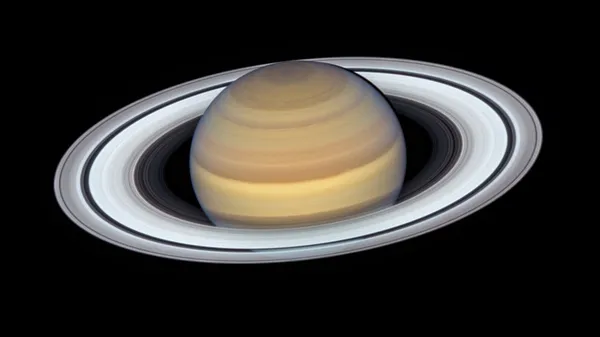
Hubble images and a new Science Advances paper confirm a giant 10-sided atmospheric wave circling the planet — the first large, regular-sided jet pattern ever seen in Saturn's southern hemisphere.
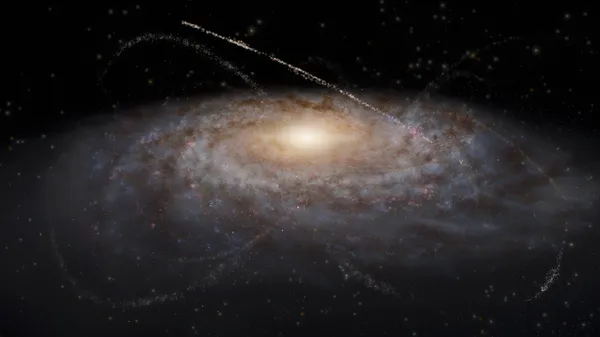
University of Washington simulations of roughly 15,000 stellar streams show the Milky Way's own gravitational structure produces kinks, gaps, and bends that look identical to dark matter subhalo signatures — complicating one of the field's leading indirect detection methods.
NASA's Nancy Grace Roman Space Telescope launched Aug. 30, 2026 on a SpaceX Falcon Heavy to study dark energy, dark matter, and exoplanets.
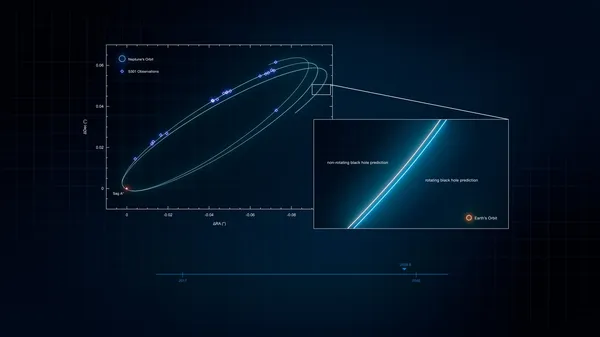
Star S301 orbits our galaxy's supermassive black hole in just 8.7 years, approaching close enough to potentially measure the black hole's spin within a decade.
The Hubble Space Telescope has detected definitive evidence that the Milky Way swallowed a dwarf galaxy named LKH 11.8 billion years ago, revealing a previously unknown merger from the earliest epochs of galactic assembly.
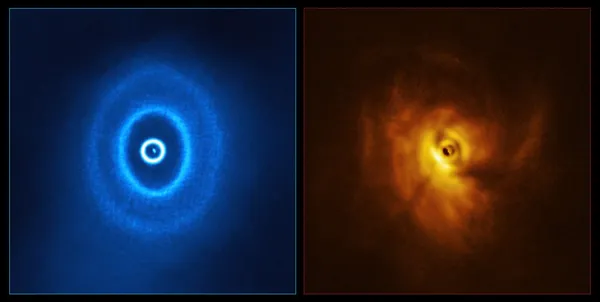
ALMA has mapped a trillion-mile gas streamer feeding the triple-star system GW Orionis, revealing how late-stage infall from the surrounding molecular cloud tilts and reshapes the protoplanetary disks where planets form.
Japan's JAXA unveiled the MMX spacecraft on August 13, 2026, targeting a world-first sample return from the Martian moon Phobos. The probe, the largest lunar or planetary spacecraft Japan has built, is scheduled to launch this autumn on an H3 rocket and return to Earth five years later.
China's Long March 7A rocket exploded 85 seconds after launch on August 10, marking the vehicle's second failure and raising questions about the engines shared with the upcoming Chang'e-7 lunar mission.
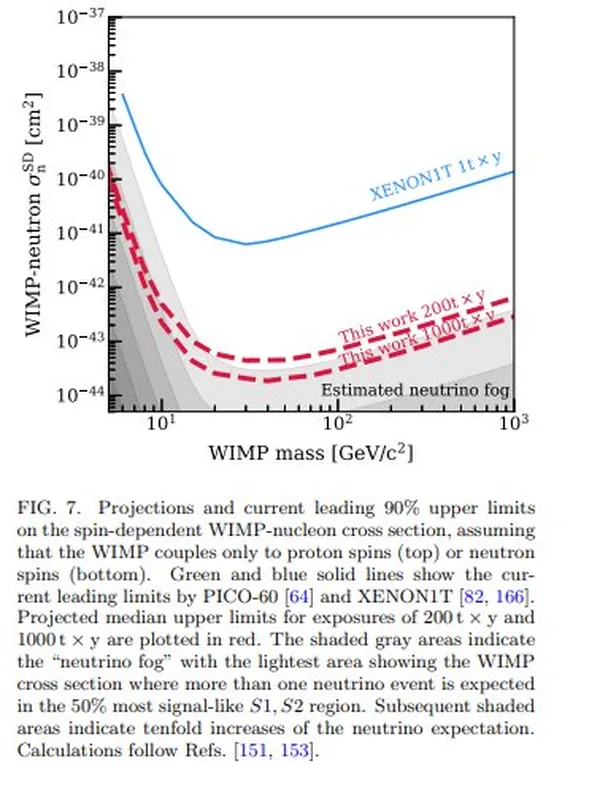
The XENONnT experiment has published record-setting limits on axion-like particles and dark photons, nearing the neutrino fog threshold using a novel detection method.
Researchers confirm a new type of cosmic object called a 'black hole star' using JWST.
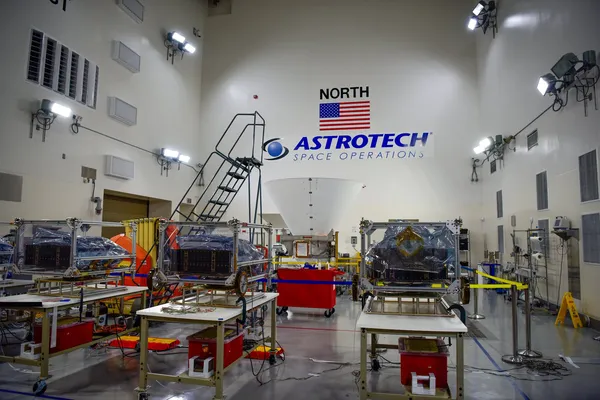
NASA's PUNCH mission predicted the arrival of a May 31, 2025 coronal mass ejection to within 30 minutes, a tenfold improvement over the previous 12-hour forecast window.
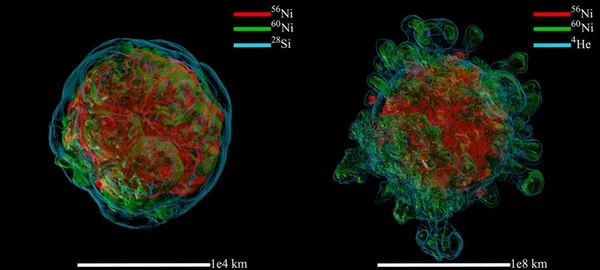
China's Einstein Probe caught a massive star's death from the very first moment — only the second clear X-ray shock breakout in 20 years — revealing a supernova that had all the ingredients for a gamma-ray burst but never produced one.
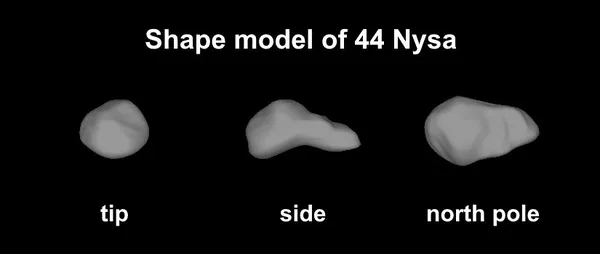
Astronomers have resolved 44 Nysa as a rare three-lobed asteroid accompanied by a small moon.
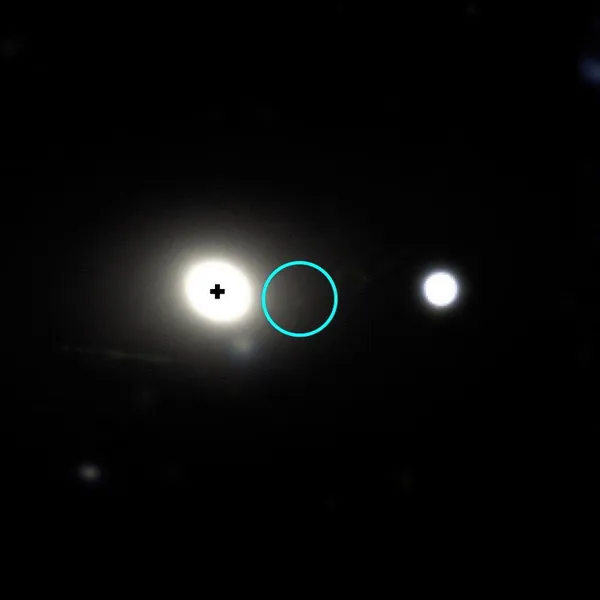
A dormant supermassive black hole, found far from its galaxy's center, was revealed when it shredded a passing star.
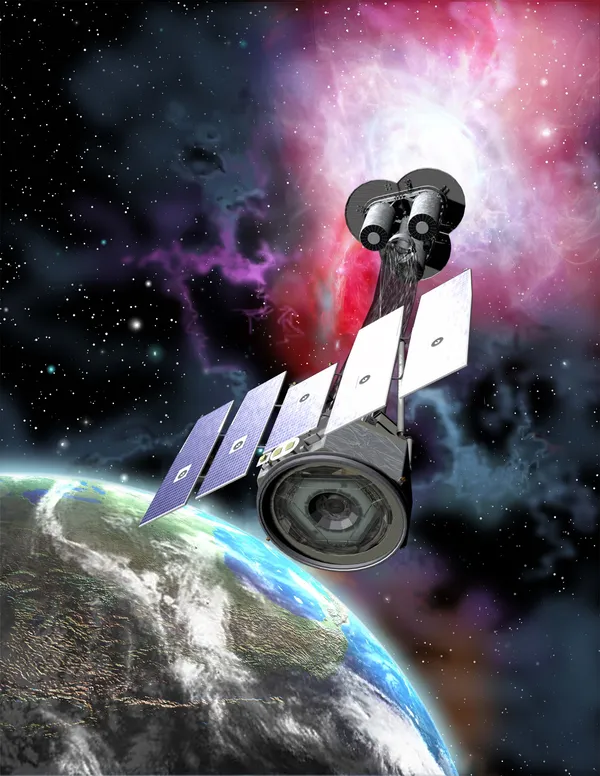
NASA's IXPE telescope captures over 140 hours of magnetar observations revealing how ultra-strong magnetic fields polarize the quantum vacuum itself, confirming a ninety-year-old quantum electrodynamics prediction.
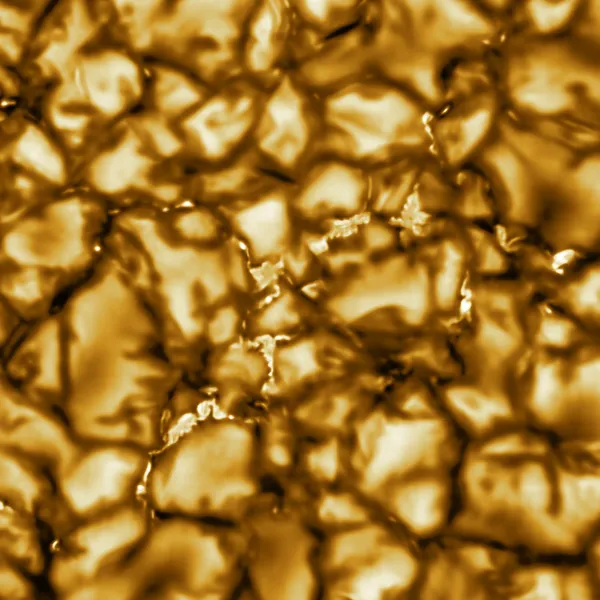
Scientists using the NSF Daniel K. Inouye Solar Telescope have confirmed the presence of Kelvin–Helmholtz instability on the Sun's photosphere for the first time, validating a decades-old theoretical prediction and revealing a hidden channel for plasma mixing and energy transport at the solar surface.
A spent SpaceX Falcon 9 upper stage struck the Moon near Einstein Crater on August 5, 2026, creating an artificial impact crater and highlighting concerns about space debris disposal.
LHAASO detects Cygnus X-3 accelerating cosmic-ray protons to at least 30 PeV, confirming the Milky Way's most powerful natural particle accelerator and shattering the long-held ~1 PeV ceiling for galactic accelerators.
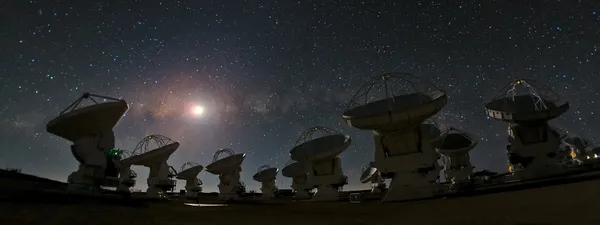
A new survey using the ALMA telescope searched for alien signals in radio frequencies above the traditional 'water hole' range and found nothing, but its results show past surveys may have covered over 6 million stars, not the 288,000 previously estimated.
Curiosity photographed the largest field of honeycomb-shaped polygonal fractures ever seen on Mars during June observations in Valle Grande, a valley where the features spread in every direction — leaving scientists unable to say how they formed.
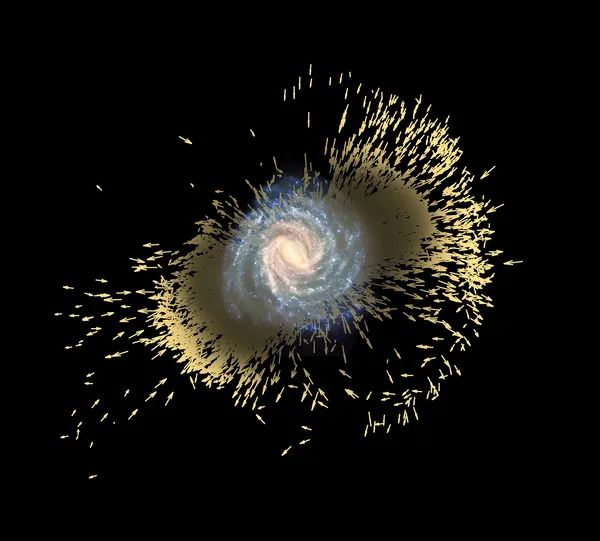
Supercomputer simulations presented at NAM 2026 show the Milky Way's disc was flipped by more than 90 degrees after a head-on collision with the Gaia-Sausage-Enceladus dwarf galaxy roughly 10 billion years ago — a finding diagnostic tests on thousands of simulated galaxies now support.
Technicians completed fueling the Roman Space Telescope on July 25, loading 290 gallons of hydrazine ahead of a SpaceX Falcon Heavy launch that will send the observatory a million miles out to Lagrange point 2.
Helium escape detected from rocky super-Earth LHS 1140b marks the first confirmed atmosphere on any habitable-zone exoplanet, with follow-up data revealing time-variable loss rates and no envelope on its companion world.
ESA's Euclid space telescope has found 31 of the most ancient quasars ever observed, including two that set a new record as the most distant — glowing when the universe was just 670 million years old and their light has been travelling 13 billion years to reach us.
All 90 personnel were safely evacuated from the Madrid Deep Space Communications Complex on July 24, 2026, and communications with more than 40 spacecraft were handed over to Goldstone, California without interruption.
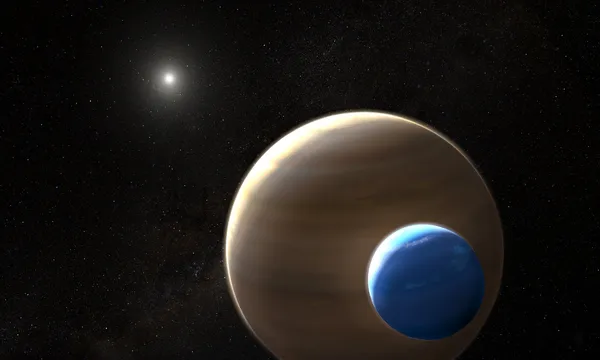
ESO's Very Large Telescope has detected a Jupiter-mass object orbiting a brown dwarf in the CD-35 2722 system — the first plausible exomoon candidate found outside our Solar System, and a challenge to how we define moons versus planets.
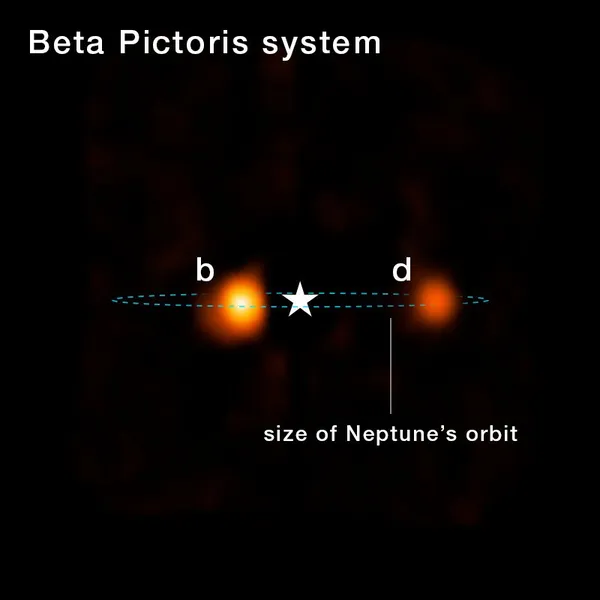
NASA's James Webb Space Telescope uncovered a previously unseen gas giant orbiting one of astronomy's most studied star systems, using spectral analysis to peer through cosmic dust and reveal the planet's atmospheric composition.
Webb's spectroscopic detection of Beta Pictoris d marks the first time an exoplanet has been found by its atmospheric chemical signature, not direct imaging — a faint giant hiding in archival data for 11 years.
NASA's $80 million twin-orbiter ESCAPADE mission launched aboard a Blue Origin New Glenn rocket on November 13, 2025. The 'Gold and Blue' spacecraft will use humanity's first simultaneous dual-spacecraft approach to study Mars' hybrid magnetic environment and the mystery of its lost atmosphere.