ESO's MOONS spectrograph achieves first light at the Very Large Telescope
The new instrument can collect spectra from nearly 1,000 stars or galaxies at once, including targets hidden behind dust near the centre of the Milky Way.
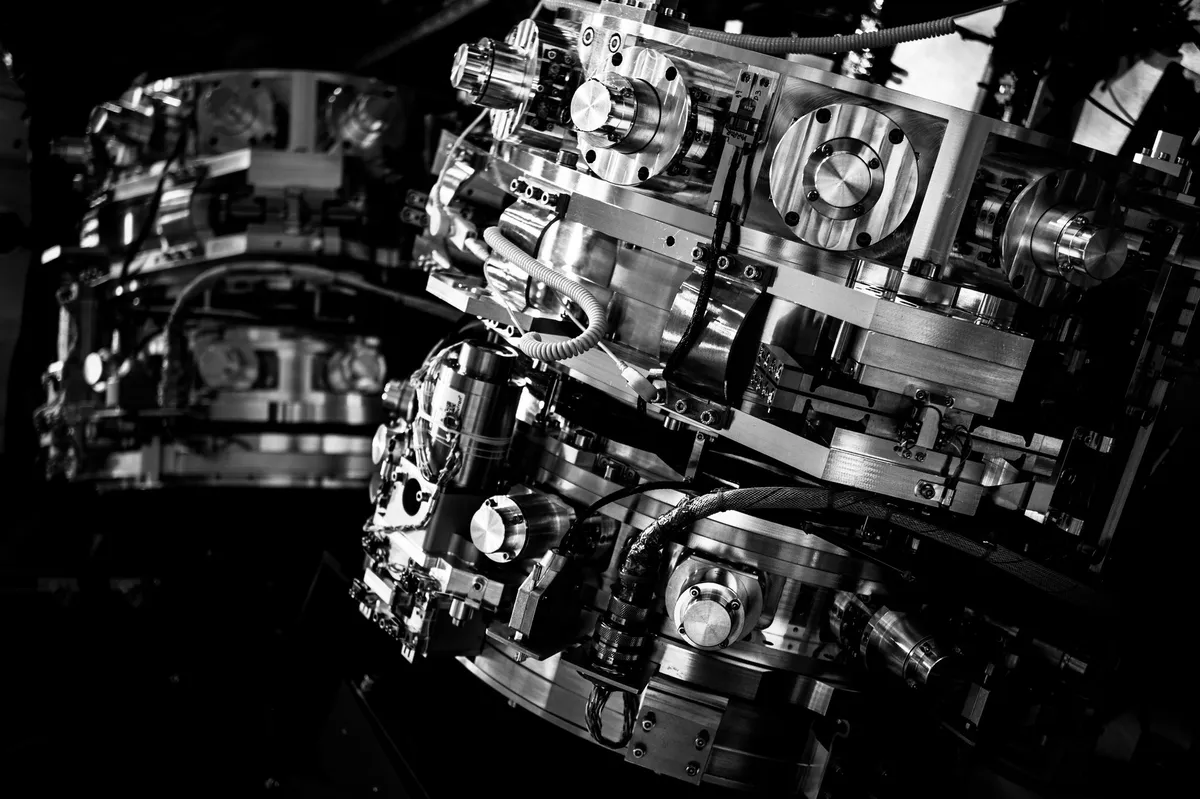
!_(potw2636a).jpg)
On 3 September 2026, the European Southern Observatory reported that its Multi-Object Optical and Near-infrared Spectrograph, MOONS, had achieved first light at the Very Large Telescope in Chile. The milestone puts a new instrument into operation with the ability to examine the Milky Way and distant galaxies at a scale that was previously difficult to achieve.
MOONS uses roughly 1,000 optical fibres to observe about 1,000 astronomical targets simultaneously. That combination of reach and scale is particularly valuable in regions where dust blocks ordinary views: ESO says the instrument can observe through dust toward the centre of the Milky Way, opening access to stars that have remained hidden from direct observation.
The first observations focused on the most challenging part of that problem. The Galactic centre is crowded and heavily obscured, but the UK Astronomy Technology Centre reported that MOONS captured an unprecedented spectroscopic view of the dust-hidden region. Rather than selecting one object at a time, the instrument can collect information from nearly 1,000 stars or galaxies in a single observation.
That throughput is the central idea behind MOONS. Its optical and near-infrared capabilities allow astronomers to work across different kinds of targets, while its many fibres mean that a single pointing can produce spectra for a large group of stars or galaxies. The result is not simply a sharper image of one small region, but a way to gather comparable measurements across much larger samples.
For the Milky Way, that means a better route into the crowded, obscured region around its centre. For more distant galaxies, the same observing strategy offers a way to study large numbers of objects together rather than building a picture from isolated targets. First light is only the beginning of the instrument’s scientific work, but the first observations already demonstrate why a thousand simultaneous lines of sight matter.
MOONS therefore arrives as a mapping instrument as much as a telescope attachment: a way to turn difficult, dust-obscured parts of the sky into large spectroscopic surveys. Its first look into the heart of the Milky Way is a particularly striking proof of concept, and the same capacity should extend the reach of the Very Large Telescope across both our own galaxy and the distant universe.