Euclid Space Telescope Discovers Its First Unknown Comet
ESA's dark-universe observatory spotted comet C/2026 S1 arching high over the Solar System between the orbits of Jupiter and Saturn.
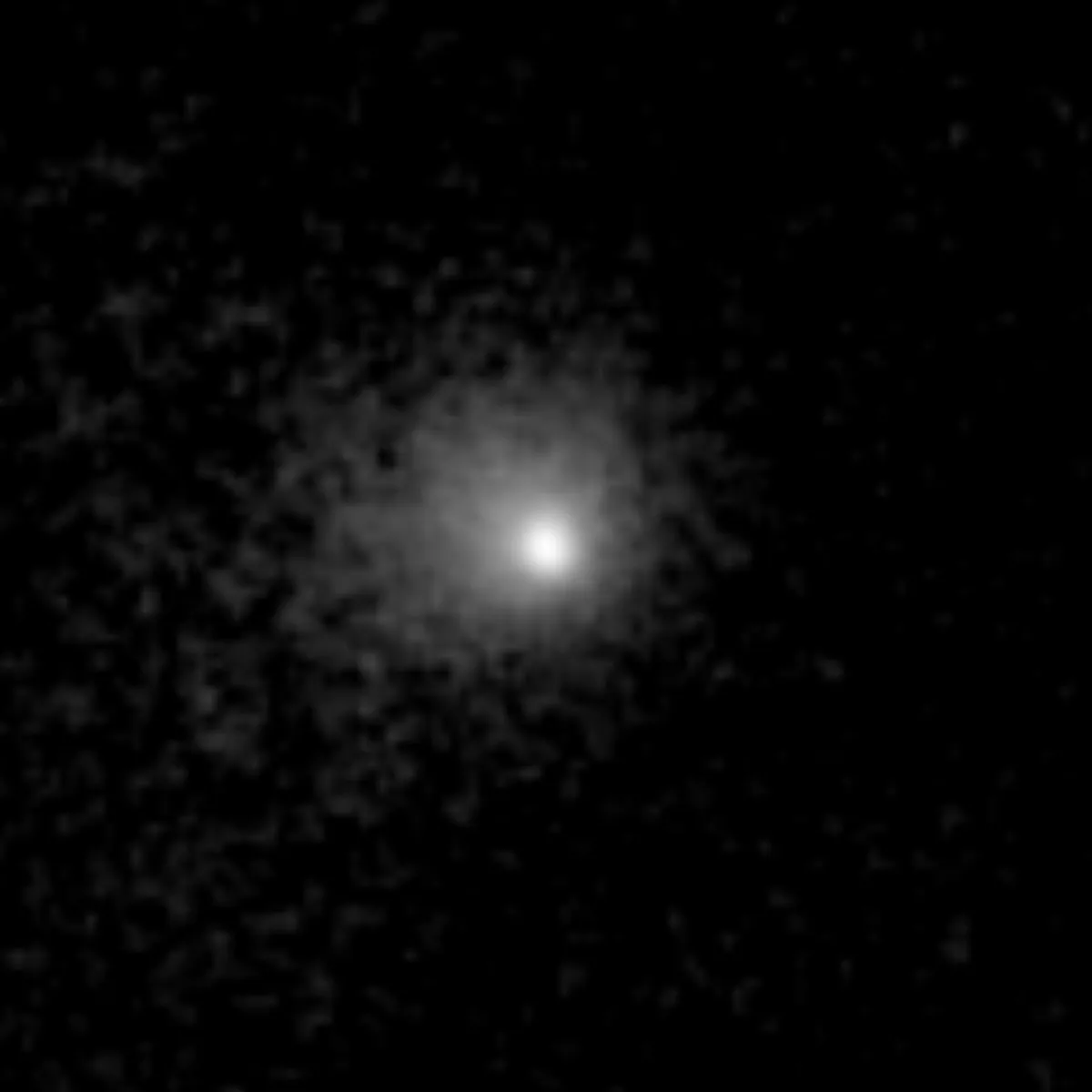

The European Space Agency’s Euclid space telescope was launched to investigate the geometry of the dark universe, peering billions of light-years outward to chart how dark matter and dark energy shape the cosmos. Yet in mid-September 2026, Euclid’s wide-angle survey caught an object far closer to home. The agency announced on October 19, 2026, that the observatory had discovered its first previously unknown comet, designated C/2026 S1 (Euclid), in images taken between September 16-24, 2026.
The detection quickly cleared verification by planetary observers. The International Astronomical Union’s Minor Planet Center officially confirmed the find on October 8, 2026, cataloging a new comet sailing through space more than 807.7 million miles from Earth.
At approximately 1.3 billion kilometers from Earth, C/2026 S1 currently sits in the cold expanses between the orbits of Jupiter and Saturn. Beyond its distance, the object’s path through the Solar System is notably distinct: rather than traveling along the ecliptic plane shared by the planets and the majority of asteroids, the comet follows an unusual orbit that arches high over the Solar System.
The discovery is a case study in astronomical serendipity. Euclid carries high-resolution cameras designed to capture faint, distant galactic structures across a third of the sky, creating a massive three-dimensional cosmic map. For a telescope calibrated to register structures millions or billions of light-years away, an icy traveler within our own planetary system represents an unexpected foreground interloper.
Spotting the body required separating it from millions of background galaxies and static stars. PhD student Mikko Pöntinen identified the comet using custom moving object detection software designed to flag objects that shift position between consecutive Euclid exposures. The result turns an instrument built for fundamental cosmology into an accidental planetary scout, proving that surveys designed to study the universe at large can still uncover uncharted bodies drifting through our own cosmic backyard.