A urinary bacterium has been caught making testosterone in the lab, raising quiet questions for prostate cancer research
Actinobaculum massiliense, a bacterium found in human urine, carries a newly characterized enzyme pair that can convert the steroid precursor DHEA into the potent androgen testosterone—a finding that has captured the attention of cancer biologists.
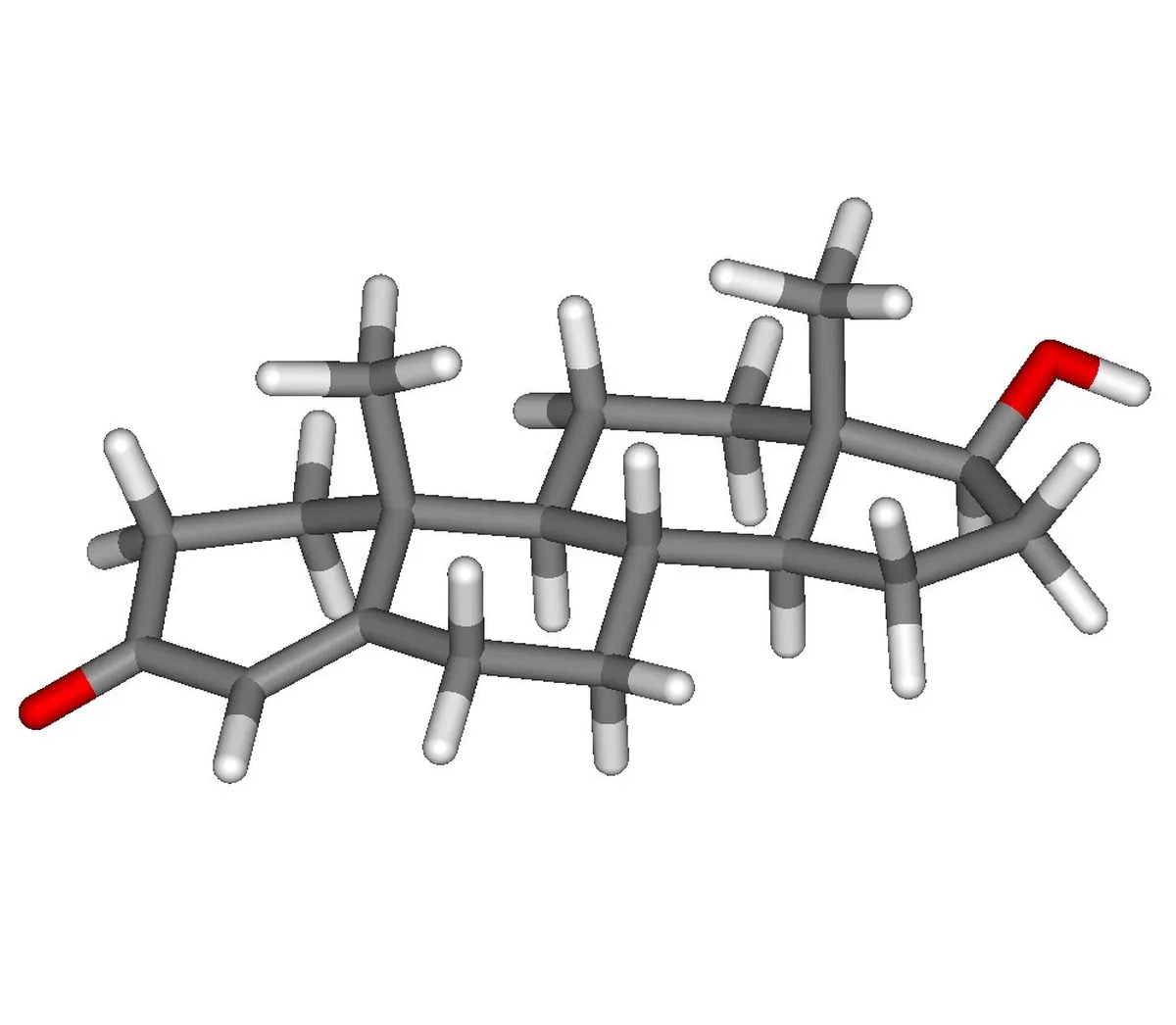

A team of researchers has identified a common urinary bacterium that possesses a direct enzymatic route to produce testosterone from a precursor steroid, a discovery that sits at the intersection of microbiology and oncology. The study, published in Nature Communications on September 3, 2026, details how strains of Actinobaculum massiliense isolated from human urine carry the dirA and dirB genes. These genes encode enzymes that together form a pathway capable of converting dehydroepiandrosterone, or DHEA, into testosterone.
The mechanism is newly characterized. Scientists at the University of Illinois and Auburn University developed a rapid screening method using a hydroxysteroid dehydrogenase (HSDH) assay to identify urinary bacteria capable of such steroid transformations. Molecular simulations of the DirA enzyme revealed a broad, open binding pocket that allows it to perform multiple steroid reactions. Its partner, DirB, has a much narrower tunnel, which restricts its chemistry and likely gives the pathway its specificity.
This isn’t an isolated curiosity of microbial biochemistry. The discovery immediately resonates with researchers focused on prostate cancer, a disease whose growth and progression are critically driven by androgen signaling. The urinary tract, where this bacterium resides, is anatomically proximate to the prostate. While the human body produces testosterone through a well-established multi-enzyme process in the testes and adrenal glands, the existence of a second, microbial production line within the same system is a detail that demands scrutiny. It points to a potential role for the microbiome in modulating local androgen levels.
That said, the researchers involved are emphatic about what the study does and does not show. Co-author Rafael Bernardi emphasized that the team is not claiming bacteria cause prostate cancer. The work demonstrates only that the bacterium possesses the molecular machinery for testosterone production, and that this machinery functions under controlled laboratory conditions. Whether A. massiliense actively produces testosterone in the complex, competitive environment of the human urinary tract—and whether that production reaches biologically meaningful levels—remains an open question.
Still, the finding provides a concrete molecular mechanism for a hypothesis that has long intrigued oncologists: that microbes in or near the urogenital system could influence the hormonal milieu of the prostate. Understanding the prevalence and activity of the dirAB pathway in clinical isolates from patients with and without prostate conditions would be a logical next step. It shifts the question from a theoretical possibility to one that can be directly investigated with genetic tools.
For now, the result stands as a compelling piece of microbial physiology with obvious, though undemonstrated, clinical implications. It suggests that the body’s hormonal landscape is subject to influences from its bacterial residents in ways we are only beginning to map. The immediate task for the field is to move from proving that a pathway exists in a petri dish to determining whether it operates as a meaningful variable in human health.
Sources
- The urinary pathobiont Actinobaculum massiliense can generate androgens via the dirAB pathway — Nature Communications
- New study uncovers bacterial route to testosterone production — News-Medical.net
- A Bacterium in the Urinary Tract Can Produce Testosterone and Prostate Cancer Researchers Are Paying Attention — Medical Daily