Long-Thought-Dead Coral Reef Off Benin Rediscovered Alive
Scientists have rediscovered a thriving coral reef ecosystem off the coast of Benin, West Africa, previously believed to have been dead for over 60 years.
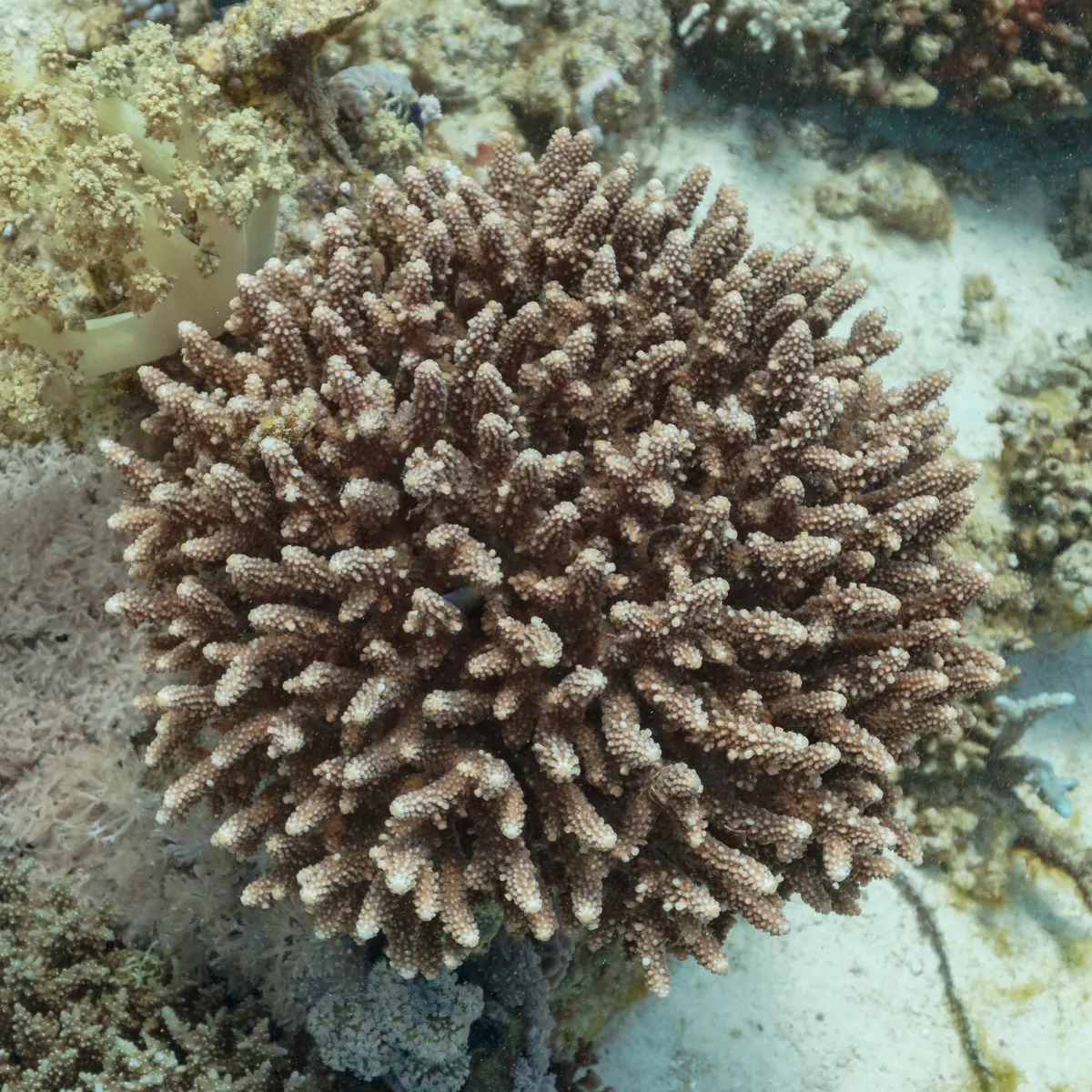
,_parque_nacional_Ras_Muhammad,_Egipto,_2022-03-26,_DD_70.jpg)
More than six decades after surveys suggested a deep coral reef off Benin was likely dead, scientists have found it alive and thriving. Using modern sonar technology and underwater drones equipped with deep-sea camera systems, researchers have identified healthy mesophotic coral ecosystems more than 50 meters beneath the surface. This discovery marks the first confirmed living mesophotic coral ecosystem on the Gulf of Guinea continental shelf. Cameras revealed healthy-looking coral patches supporting multiple fish species more than 50 meters beneath the surface.
Scientists had been searching for coral reef barriers that were detected but not investigated in the 1960s, and were thought to be dead. Their investigation, employing sonar surveys to pinpoint search areas and then an underwater drone with trail cameras for closer inspection, revealed an apparently thriving ecosystem. This ecosystem is characterized by deep-water corals that support a variety of species. This discovery suggests that other overlooked reefs may exist along West Africa’s coast.
The rediscovered reef supports at least eight types of coral and eight species of fish, indicating a robust and active marine environment. The mesophotic zone, where these corals are found, exists at depths typically between 50 and 150 meters, receiving only limited sunlight. These deep-water habitats are less understood than shallow coral reefs but are crucial for marine biodiversity.
The initial surveys in the 1960s likely failed to detect the living reef due to the technological limitations of the time. Deep-sea exploration requires specialized equipment to withstand pressure and darkness, and to accurately map underwater topography. Modern sonar and remotely operated vehicles allow for a much more detailed and comprehensive understanding of these challenging environments.
This rediscovery highlights the resilience of marine ecosystems and the potential for life to persist in unexpected places. It also underscores the importance of continued exploration and technological advancement in marine science.
The researchers utilized advanced underwater drones and deep-sea camera systems to document the condition of the reef. These tools provided high-resolution imagery and data, allowing scientists to confirm the presence of a vibrant ecosystem that had been underestimated for decades.
Finding a living mesophotic coral reef off the coast of Benin is a significant scientific achievement. It not only revises our understanding of this particular region’s marine biology but also opens up new avenues for research into similar deep-water environments along the African coastline.
The thriving ecosystem discovered demonstrates that even areas presumed to be devoid of life can harbor complex biological communities. This finding could spur further investigations into other parts of the West African continental shelf that may hold similar hidden marine treasures.
As scientists continue to explore the depths, discoveries like this serve as a powerful reminder of how much remains unknown about our planet’s oceans and the critical need to protect these fragile environments. The successful rediscovery off Benin is a testament to both the enduring nature of life and the evolving capabilities of scientific exploration.