Canada awards Alstom $4.7 billion contract to build VIA Rail’s first Canadian-made fleet in 40 years
A new fleet of 313 passenger rail cars for VIA Rail will be designed, manufactured, and maintained in Ontario and Quebec under a landmark agreement signed this month.
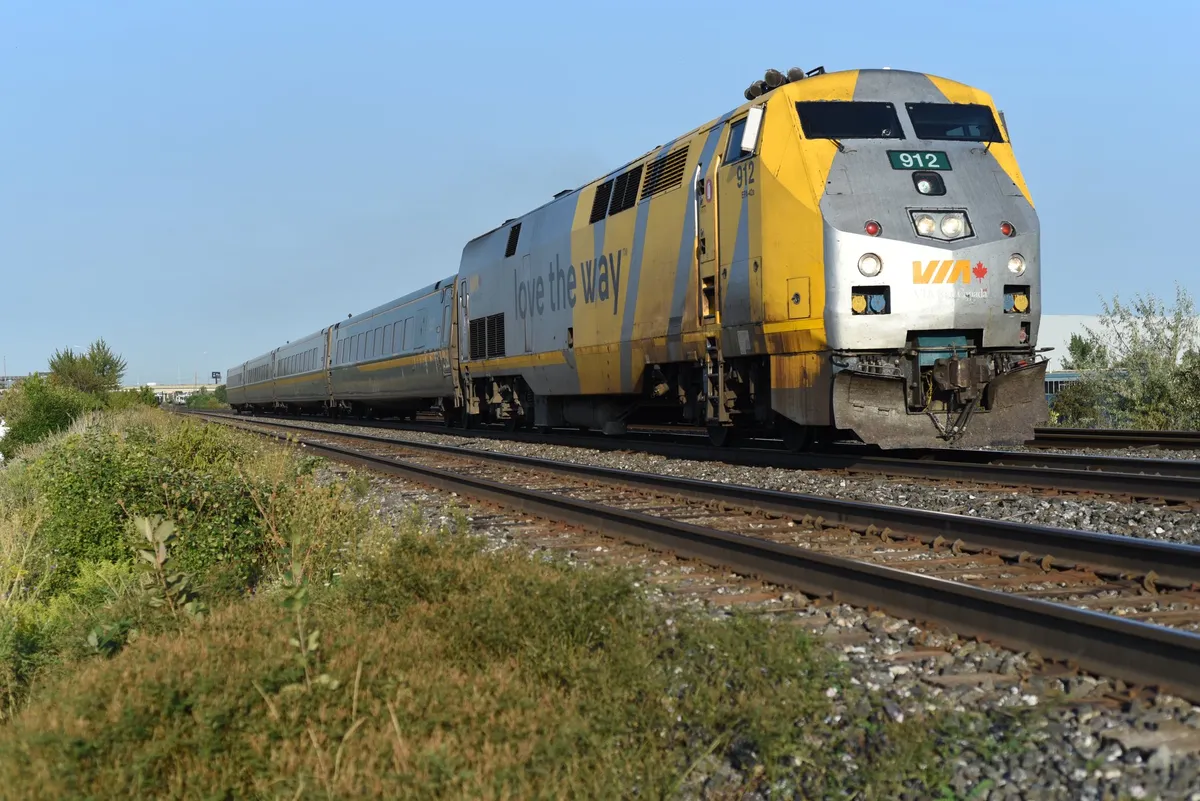

On September 3, 2026, Alstom signed an agreement to design, engineer, manufacture and support a new Long Distance, Regional and Remote (LDRR) fleet of 313 passenger cars for VIA Rail Canada. The contract, valued at over $4.7 billion, marks the first time in four decades that passenger cars for the national rail carrier will be built entirely on Canadian soil. The work will be performed at Alstom facilities in Ontario and Quebec, with the federal government funding the acquisition and long-term maintenance of the new fleet.
The scale of the order — 313 cars across three service categories — represents a generational renewal for VIA Rail’s long-distance network. The current fleet, much of it built in the 1940s and 1950s, has been maintained through decades of refurbishments, but the physical limits of those cars have long constrained service reliability and passenger capacity on routes stretching from the Atlantic to the Pacific. A fleet built from the ground up for Canadian distances and conditions is a direct answer to that constraint.
The political framing around the announcement has focused heavily on the domestic manufacturing angle. Federal government spending over $4.7 billion for VIA Rail to acquire and maintain 313 new passenger rail cars from Alstom Canada ensures the work stays in two provinces with deep but struggling industrial rail histories. For governments in Ottawa, Toronto, and Quebec City, a “made-in-Canada” fleet is as much an industrial policy achievement as a transportation one, reviving a supply chain that has been dormant since the last Canadian-built cars rolled out in the 1980s.
The contract is structured as a full-lifecycle agreement, meaning Alstom’s responsibility extends beyond delivering the cars to include decades of technical support and maintenance. This shifts the financial risk of long-term upkeep away from the Crown corporation and onto the manufacturer, an arrangement that reflects the complexity of maintaining a specialized fleet over 30 or 40 years. It also ties Alstom’s profitability to the fleet’s reliability, creating a direct incentive for the builder to get the engineering right from the start.
What the agreement does not include is a specific timeline for when the first new cars will enter service. Design and engineering work will begin immediately, but the manufacturing phase for a fleet of this size, with the customizations required for remote and regional services, is a multi-year undertaking. The existing fleet will need to remain in service, through ongoing heavy maintenance, until the replacements are ready to be phased in route by route.
For passengers, the eventual payoff will be in consistency. A single, modern fleet designed for interoperability should reduce the mechanical failures and service delays that stem from maintaining a patchwork of aging equipment. For the railway itself, the investment represents a bet that long-distance rail still has a central role in a country where the geography has always made alternatives like short-haul air or private car travel the default for many. Reviving the industrial capacity to build the trains is the first, multibillion-dollar step in proving that bet right.