Executive Yuan approves NT$352 billion HSR spur from Taipei to Yilan
Taiwan clears a 60.6-km high-speed rail extension to Yilan County, reducing Taipei-to-region travel time to just over 20 minutes while advancing the Executive Yuan's round-island connectivity strategy.
.JPG)
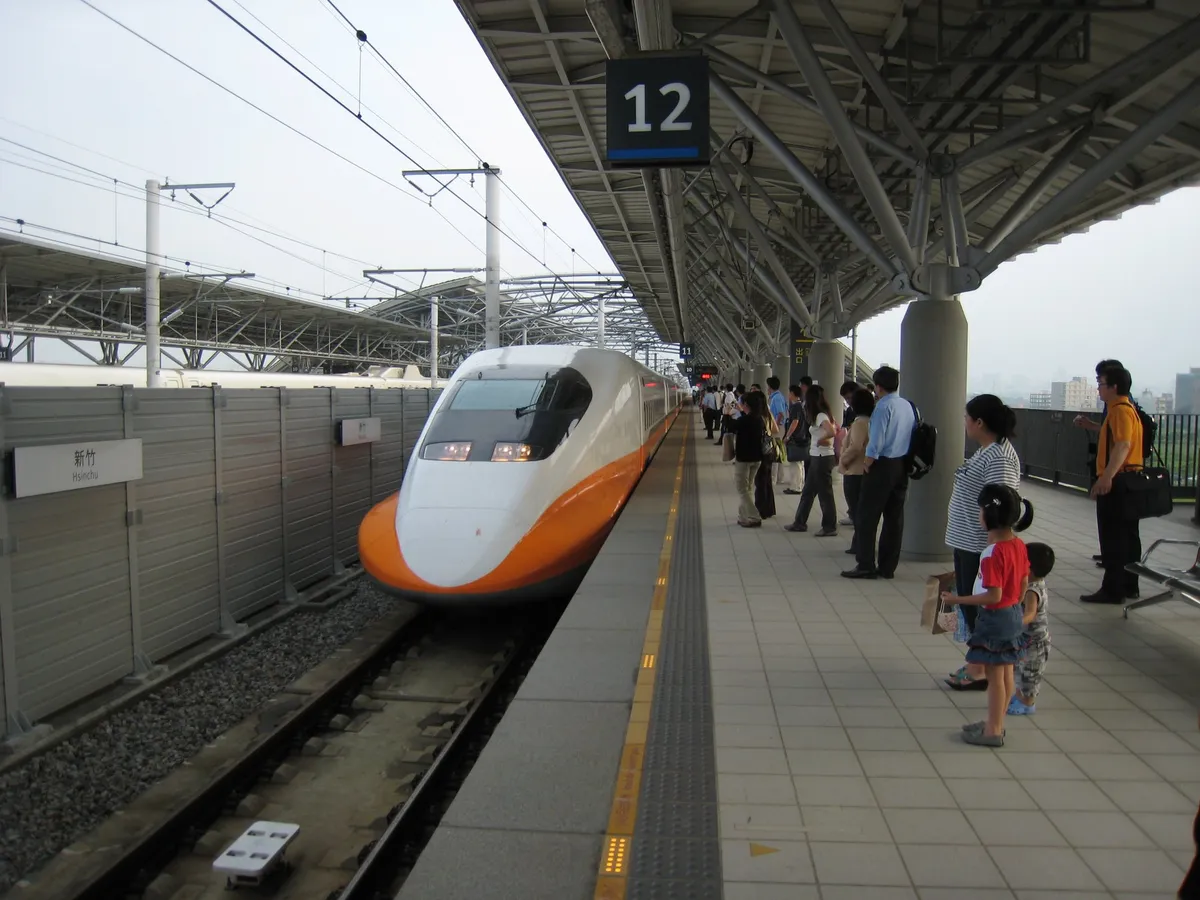
The Executive Yuan has approved a 60.6-kilometer high-speed rail extension from Taipei’s Nangang station to Yilan County, clearing a decisive path for one of the island’s most ambitious infrastructure projects in recent years. Premier Cho Jung-tai signed off on the route today, slashing projected travel time between the capital and Taiwan’s northeastern coast to just over 20 minutes.
The financial scale of the project reflects both its engineering complexity and its scope beyond mere track-laying. Railway estimates place the cost of the rails themselves at NT$222 billion, with the total investment reaching roughly NT$352.2 billion when including a new depot, maintenance facility, and rolling stock. This capital allocation underscores how modern rail expansion has shifted from laying simple lines to engineering complete operational ecosystems capable of sustaining high-frequency service.
Construction will take about 11 years following final approval, a timeline that acknowledges the geological challenges of boring tunnels through Taiwan’s mountainous terrain and coastal fault lines. The extension is not an isolated spur but a deliberate node in the Executive Yuan plan to connect Taiwan in four 90-minute segments, requiring meticulous coordination between civil engineering teams, rolling stock manufacturers, and operations planners before any passenger can ride the line.
The approval carries strategic weight, particularly as Taiwan’s existing conventional rail corridors approach full capacity under years of heavy commuter and freight traffic. By shifting a significant portion of regional travel onto the new corridor, authorities will relieve pressure on the aging network while ensuring consistent service reliability for passengers. Diverting that traffic will not instantly solve every bottleneck along the western seaboard, but it removes a critical constraint on the island’s transportation backbone.
Infrastructure projects of this magnitude rarely face delays for a lack of vision, and Taiwan’s rail expansion has already demonstrated how carefully sequenced capital allocation can transform geographic isolation into streamlined transit. The new corridor will require years of meticulous ground preparation, standardized-gauge track laying, and signaling calibration long before revenue service begins. But with approval secured and financing mapped out, the physical groundwork for a fundamentally different travel experience along the island’s eastern flank has finally begun.