A Computer History Museum XR exhibit is, finally, a story about headsets you can actually touch
The Computer History Museum's 'Extended Reality: Visions of the Future' opens October 1, 2026 with more than 100 headsets, smart glasses, and wearables spanning from Sutherland to Vision Pro.
Ivan Sutherland built the first head-mounted display in 1968 and strapped it to the ceiling so the user didn’t have to hold it up. It drew wireframe rooms that responded to head motion and was, by any honest description, both ridiculous and a generation ahead of its time — the kind of object that lives in a museum not because it worked well but because it started something that took fifty years to catch up with it. On September 10 the Computer History Museum announced that Sutherland’s apparatus is now joining the museum’s collection in a new long-form exhibit, Extended Reality: Visions of the Future, opening October 1, 2026 and running through March 28, 2027.
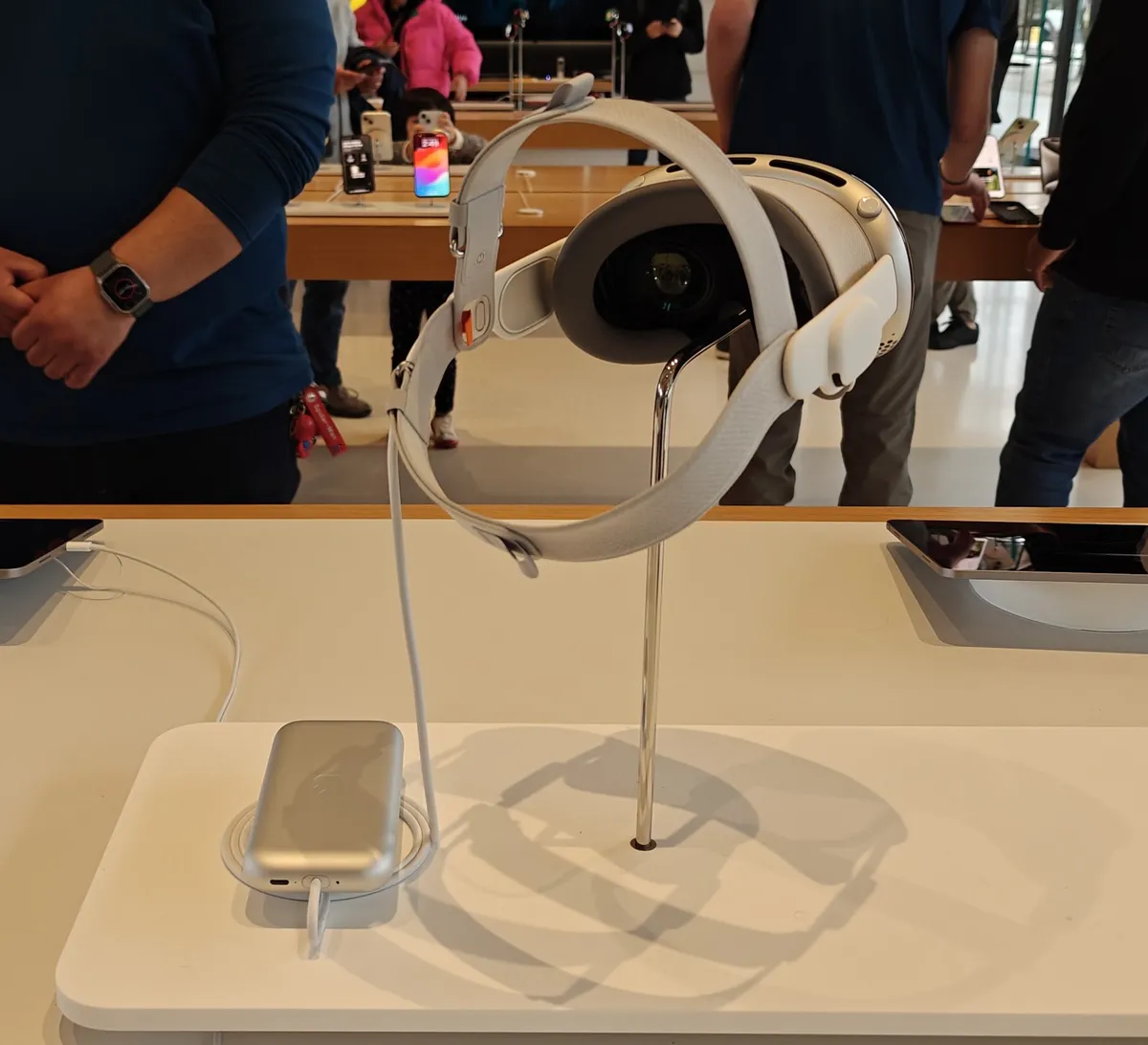
What makes the show worth singling out is the count. The Museum says it will put more than 100 headsets, smart glasses, and wearables on display in one room — Sutherland’s original at one end, Apple Vision Pro and Ray-Ban Meta smart glasses at the other, and roughly fifty-eight years of iterative failure, awkward industrial design, and intermittent commercial promise in between. That is a lot of plastic on heads for an institution whose main building in Mountain View is, by Silicon Valley standards, a fairly quiet, low-key space. The Museum is also framing the show as the centerpiece of a year-long XR programming push that includes talks and partner events running alongside the exhibit.
For a piece of consumer hardware that has spent most of its existence as a punchline — too heavy, too isolating, too expensive, too much like wearing a small television on your face — the shift from the 1990s Virtual Boy to a contemporary lineup of mixed-reality headsets and audio-only smart glasses is the actual content of the exhibit, and the Museum seems to know it. The Sutherland device, VPL Research’s EyePhone, early military and industrial headsets, the long mid-period where the technology mostly survived in research labs and training simulators, and the recent consumer revival are all going to sit on one floor, which is itself a kind of argument: that the VR winter was real, that it ended, and that you can now walk past the entire timeline in an afternoon.
The smart-glasses branch is, quietly, the more interesting half of the story. Ray-Ban Meta frames have sold in numbers that no one in the industry was modeling a few years ago, and they do almost none of the things a 1990s VR evangelist would have called essential — no stereoscopic display on the face, no controllers, no enclosing headset. They are, instead, a camera, a microphone, and a small speaker on a pair of sunglasses that mostly try to be invisible. Putting those on the same exhibit floor as Sutherland’s ceiling-mounted wireframe machine and a Vision Pro is a fairly honest way of presenting where the technology actually went: some of it toward heavier and heavier displays strapped to the user’s skull, some of it toward the opposite — eyewear you forget you’re wearing.
It’s also an exhibit that, by accident or design, lands in the same year as the Vintage Computer Festival community’s regular gatherings of the same kind of vintage silicon crowd — the people who, more than any museum, have kept the early head-mounted displays, the VFX1 headsets, and the assorted 1990s attempts at consumer VR in working condition for decades. CHM’s exhibit is the institutional version of what that community has been doing informally: preserving the physical objects so the next round of headsets, whatever they turn out to be, has a visible history to react against rather than reinvent.
Whether a hundred headsets on display changes how the next one ships is, of course, a separate question. The Museum’s framing — that XR is genuinely at an inflection point, with consumer smart glasses finally selling and mixed-reality headsets good enough to be a real product — is one the industry has been making on its own behalf for about a decade. The exhibit doesn’t really argue with that. It just puts the receipts next to each other and lets a visitor decide whether the long middle section of underwhelming hardware makes the current moment look like a turning point or a particularly well-funded plateau. Either way, for the next six months in Mountain View, the entire timeline will be on one floor, and you can stand at one end and look at a ceiling-mounted contraption from 1968 that did almost nothing, and at the other end look at a pair of Ray-Bans that try to do as little as possible, and notice that those are roughly the same bet made fifty-eight years apart.