Record crowds fill Vintage Computer Festival as retro collecting grows in AI era
More than 3,500 people attended the 2026 Vintage Computer Festival, a record turnout that featured a panel with Apple's original co-founders amid a broader resurgence of interest in hands-on, tangible computing history.
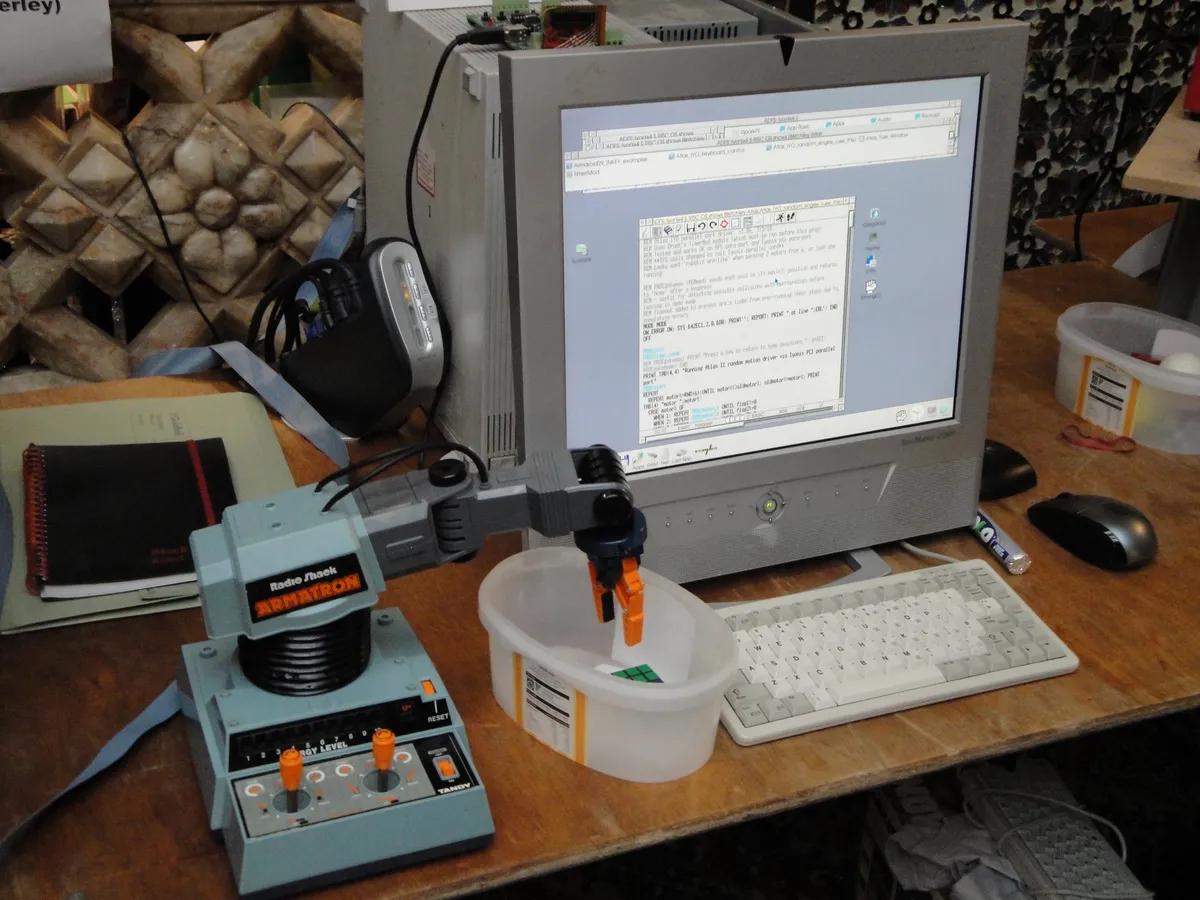

On August 1 and 2, a record number of people arrived in Silicon Valley to operate computers that most of them could no longer buy software for. This year, more than 3,500 people attended the two-day Vintage Computer Festival in early August, a figure that shatters the event’s previous attendance records. The festival, which celebrated the 50th anniversary of Apple, didn’t just offer nostalgia. It offered a functioning alternative to the cloud-based, AI-driven present: rows of restored Xerox Altos, Apple IIs, and Commodore 64s, all of them operable and none of them running on servers someone else controls.
The central draw was a panel with Apple’s original co-founders, Steve Wozniak and Ronald Wayne, who rarely appear together in public. The festival featured a panel with Apple co-founders Steve Wozniak and Ronald Wayne, a pairing that underscored the material reality of the machines on the floor. Wayne left the company just 12 days after its founding, well before Apple became the abstraction it is today, and Wozniak’s engineering of the Apple I and II was famously a hands-on project in a garage. Their presence framed the weekend less as a museum tour and more as a working demonstration of a period when you could understand a computer by holding its circuit boards.
That hands-on quality defines the modern Vintage computer collecting scene. The trend isn’t about sealed-in-box speculation or static display. It’s about restoration—getting a fifty-year-old machine to boot from its original media, display on a period-correct monitor, and respond to commands typed on a keyboard with switches that are no longer manufactured. The physical work of diagnosing a failed capacitor or cleaning corroded traces is the point, a direct counterpoint to the opaque, service-based model of contemporary computing where the only tool most users have is a subscription fee.
The contrast with the dominant tech narrative of 2026 is stark. While headlines are dominated by large language models and autonomous agents, the festival showcased systems whose entire function is contained within a single, owner-serviceable case. The interest, then, isn’t a simple rejection of the new. It’s a specific attraction to the legible. An AI model’s reasoning is a black box running on distant infrastructure; a vintage machine’s logic is laid out on a board you can probe with a multimeter. One trend promises intelligence you can’t see; the other offers a machine you can completely understand, provided you’re willing to learn its now-obsolete architecture.
Organizers and attendees describe the growth as a corrective, not an escape. In an era where consumer technology is increasingly defined by planned obsolescence and non-repairable designs, a restored Xerox Alto or IBM 5100 represents a reclaiming of agency. The machine works because someone made it work, not because a remote server is still online. The record crowd of over 3,500 people suggests that this particular form of agency—the kind that requires a soldering iron and a stack of original technical manuals—is finding a wider audience precisely when the alternative feels most intangible.
What’s growing is a community built on a specific kind of competence. The festival floor was a showcase of problems solved: a persistent graphics glitch traced to a single failing chip, a disk drive that finally read after a painstaking head alignment, a system brought back from literal garbage-heap salvage. Each solved problem is a small, complete story of cause and effect, a narrative that the festival’s record turnout suggests a growing number of people find more satisfying than prompting an AI and accepting an output whose provenance they can’t audit. The thrill, as both sources noted, is in the growing—not in the having, but in the making-work-again.