Two Capybaras Walked Into a Brazilian State Legislature Mid-Vote
Two capybara wandered into Brazil's Mato Grosso state legislature on July 30, just as deputies were preparing for a vote.
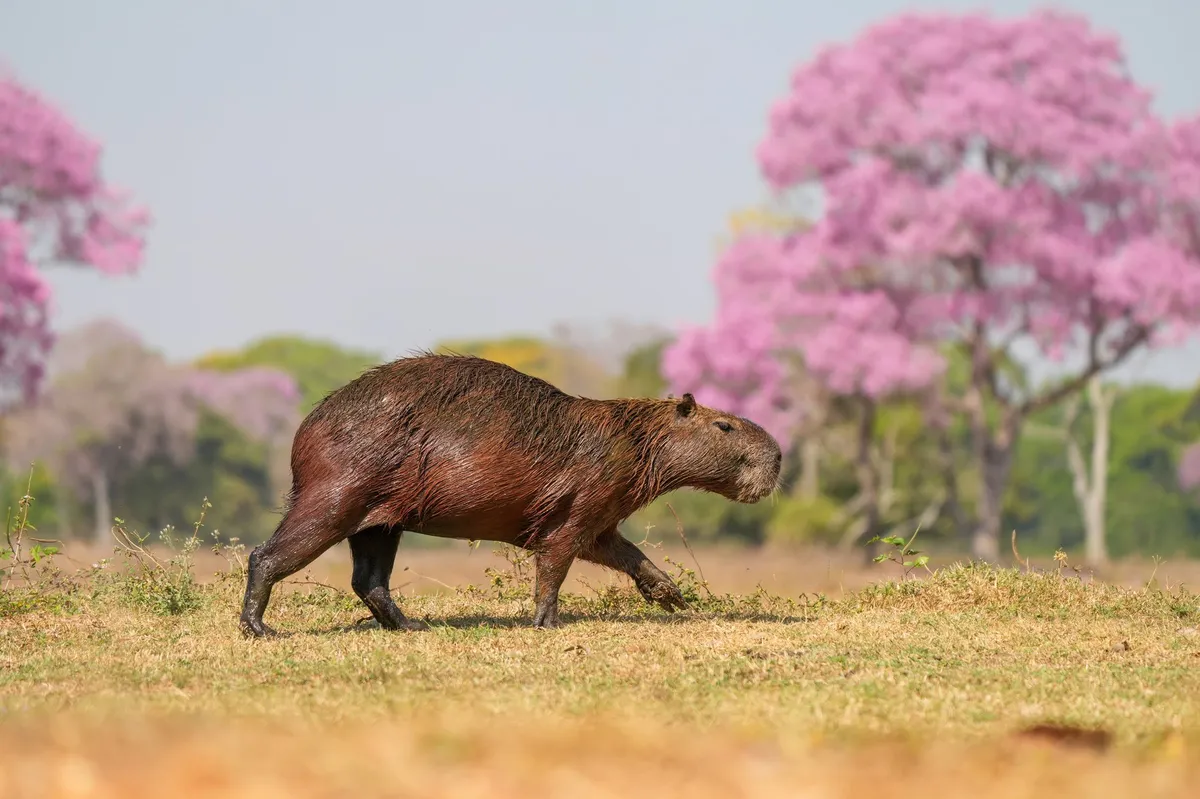

On July 30, two capybara — the world’s largest rodents, semiaquatic and typically docile — walked into the Legislative Assembly of Mato Grosso in Cuiabá, Brazil, while deputies were preparing for a vote. The animals entered the reception area and were filmed near security turnstiles that prevented them from reaching the chamber during what would otherwise have been a routine legislative session.
Employees at the assembly have noted that the animals are sometimes spotted nearby, owing to the building’s proximity to Parque das Águas, which maintains a native capybara population. The pair explored the reception area on July 30 before being turned back; no injuries and no damage were reported.
Capybaras have adapted well to urban environments across Brazil, and encounters with humans in Brazilian cities are far from unheard of. This particular visit carried a certain novelty, though — arriving during an active session, in a building where the day’s business presumably involved governance rather than wildlife management.
There is a straightforward ecological explanation. Parque das Águas borders the legislative complex, and the capybara population in the park has grown accustomed to urban surroundings. The animals likely followed a natural corridor — green space, drainage channels, or simply open ground — that led from the park to the assembly’s entrance. That the turnstiles proved an effective barrier suggests the capybaras were curious but not aggressive, and the staff response was measured rather than panicked.
These encounters are part of a broader pattern. As Brazilian cities expand alongside green corridors, capybaras have become a regular, if surprising, presence in urban spaces — in parks, on golf courses, and occasionally in the lobbies of government buildings. The visitors to the Mato Grosso legislature were unusual only in timing and location, not in the underlying dynamic: a wild population pressing against the edges of the built environment, and the built environment, in this case, politely turning them away at the door.
Not as a loose allusion, either. The capybara’s quiet comfort in human spaces — comfortable enough to wander into a state legislature mid-vote, unbothered — reflects a coexistence that Brazilian cities are still negotiating in real time. What happened in Cuiabá was small and strange and oddly fitting: an animal that has thrived precisely because it is neither fully wild nor fully domesticated, showing up in the one place least prepared to classify it.