Jefferson Lab's search for Y(2175) yields two unexpected structures
An experiment hunting an exotic particle instead found evidence for two strange new structures that could belong to the XYZ family.
Carnegie Mellon physicists have demonstrated an in-plane version of the anomalous Hall effect, overturning the long-held assumption that the Hall response only appears when a magnetic field is perpendicular to a material.
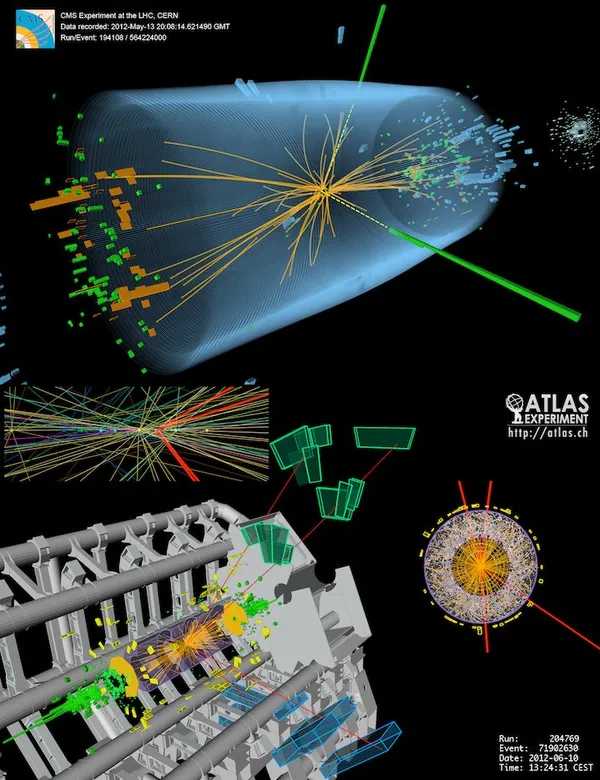
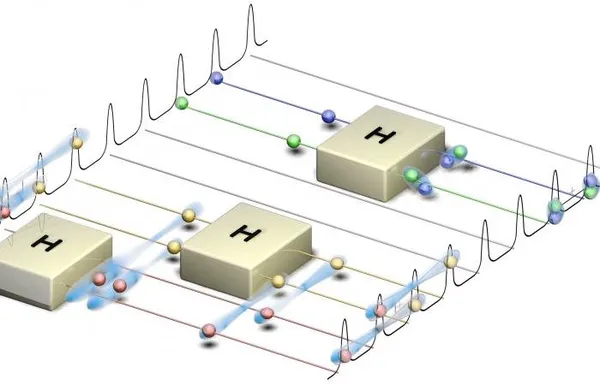
At ICHEP 2026 in Brazil, both CERN experiments reported their most sensitive searches for double-Higgs production — and ATLAS saw a 2.6 sigma excess that particle physicists are taking seriously.
Monash physicists have calculated that mixtures of bosons and fermions can spontaneously form stable, self-bound quantum droplets held together by a precise internal balance, overturning decades of assumptions about strongly interacting systems.
The Muon g-2 collaboration reports its most sensitive direct measurement of the muon electric dipole moment yet, finding it consistent with zero and tightening constraints on physics beyond the Standard Model.
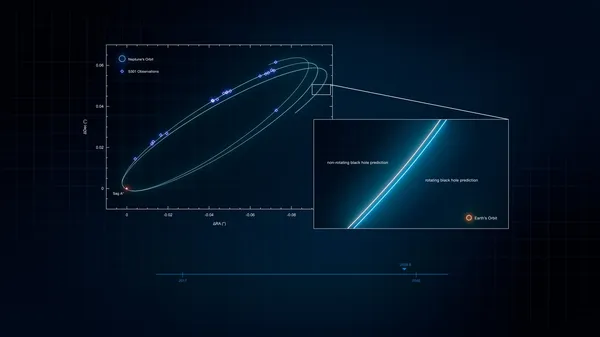
Star S301 orbits our galaxy's supermassive black hole in just 8.7 years, approaching close enough to potentially measure the black hole's spin within a decade.
The Hubble Space Telescope has detected definitive evidence that the Milky Way swallowed a dwarf galaxy named LKH 11.8 billion years ago, revealing a previously unknown merger from the earliest epochs of galactic assembly.
NIST and collaborators sent entangled photons through 62 km of commercial above-ground fiber in the DC suburbs for over 20 consecutive hours at 92.8% uptime, a demonstration that quantum networks may not require purpose-built underground infrastructure.
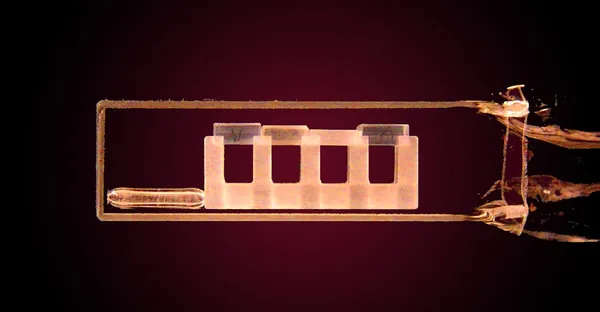
A new superconducting device demonstrates the conversion of heat near absolute zero into useful work, marking a significant step in quantum technology.
China's Long March 7A rocket exploded 85 seconds after launch on August 10, marking the vehicle's second failure and raising questions about the engines shared with the upcoming Chang'e-7 lunar mission.
Petermann Glacier in northwest Greenland calved a 76.4 km² ice island on August 4, 2026, its largest floating-ice loss since 2012, while satellite data reveals two more massive islands are likely to detach soon as the glacier's floating tongue continues to fracture.
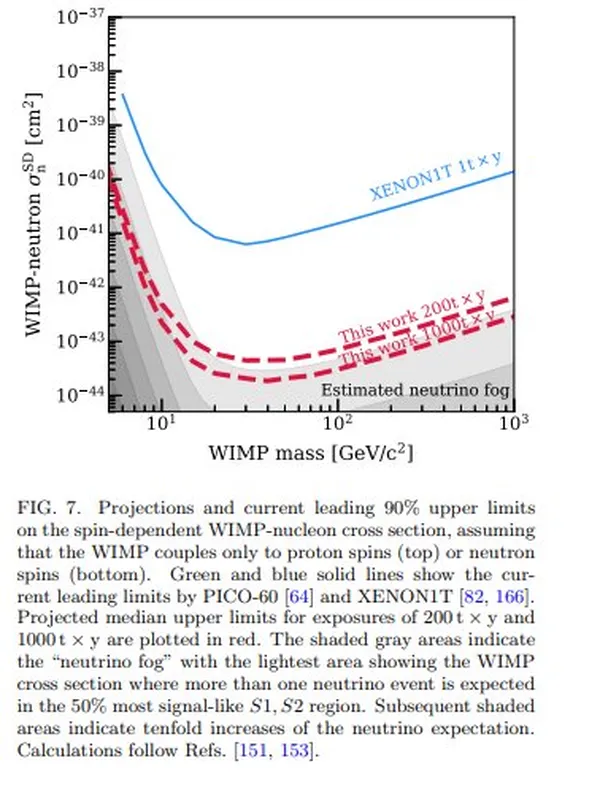
The XENONnT experiment has published record-setting limits on axion-like particles and dark photons, nearing the neutrino fog threshold using a novel detection method.
A new multidimensional measurement at CERN's Large Hadron Collider reveals evidence of gluon saturation inside heavy nuclei, challenging decades of nuclear shadowing theory.
The BESIII Collaboration has confirmed the X(2370) as a pseudoscalar glueball after 15 years of study using 10 billion J/ψ decays — the first experimental glueball ever observed.
NASA's PUNCH mission predicted the arrival of a May 31, 2025 coronal mass ejection to within 30 minutes, a tenfold improvement over the previous 12-hour forecast window.
HRL Laboratories demonstrates an 18-qubit silicon quantum processor with a custom CMOS controller operating at -450°F inside the cryostat, running error correction autonomously without real-time room-temperature electronics.
Researchers prove ordinary sunlight can generate quantum-entangled photon pairs using a cone-shaped solar concentrator, challenging the long-held assumption that artificial laser light is required.
A technique to grow niobium diselenide under graphene produces wafer-scale superconducting films that remain stable in air, overcoming a key barrier to scalable quantum devices.
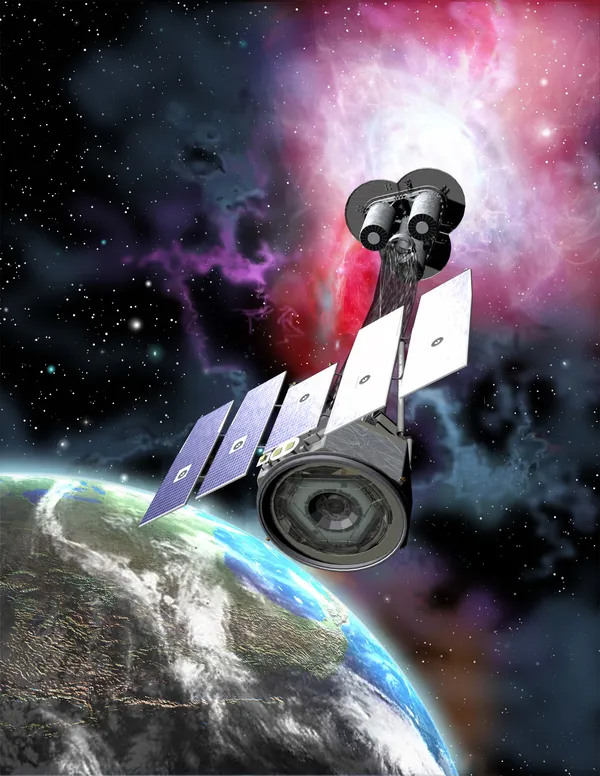
NASA's IXPE telescope captures over 140 hours of magnetar observations revealing how ultra-strong magnetic fields polarize the quantum vacuum itself, confirming a ninety-year-old quantum electrodynamics prediction.
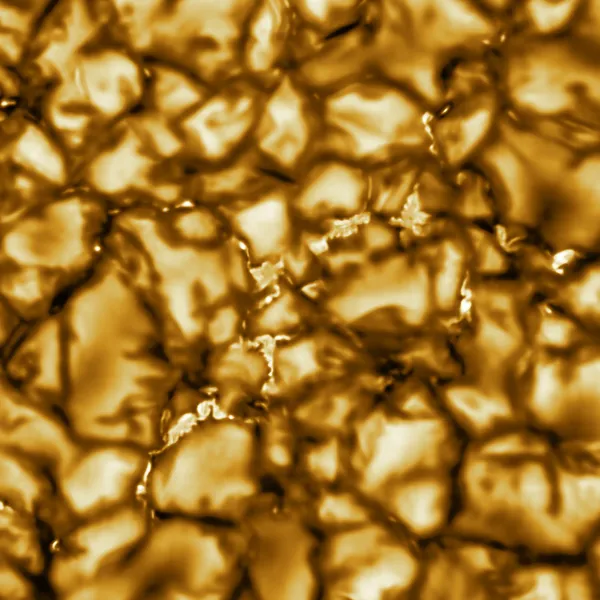
Scientists using the NSF Daniel K. Inouye Solar Telescope have confirmed the presence of Kelvin–Helmholtz instability on the Sun's photosphere for the first time, validating a decades-old theoretical prediction and revealing a hidden channel for plasma mixing and energy transport at the solar surface.
Researchers have built a device that uses two colors of laser light to direct an electronic current through a semiconductor without any external electrical power.
Researchers demonstrated quantum entanglement distribution over a 24.4-kilometer metropolitan fiber while it carried high-capacity internet traffic, achieving more than 94% fidelity.
A spent SpaceX Falcon 9 upper stage struck the Moon near Einstein Crater on August 5, 2026, creating an artificial impact crater and highlighting concerns about space debris disposal.
LHAASO detects Cygnus X-3 accelerating cosmic-ray protons to at least 30 PeV, confirming the Milky Way's most powerful natural particle accelerator and shattering the long-held ~1 PeV ceiling for galactic accelerators.
IBM and the University of Chicago announced three quantum computing demonstrations on July 30, 2026, claiming to have crossed the threshold for computational advantage — a milestone that separates verifiable classical-hard proofs from empirical benchmark comparisons.
A $57 million vertical wind tunnel replaces two aging facilities and will test aircraft, rockets, and spacecraft for missions to the Moon, Mars, Venus, and Titan.
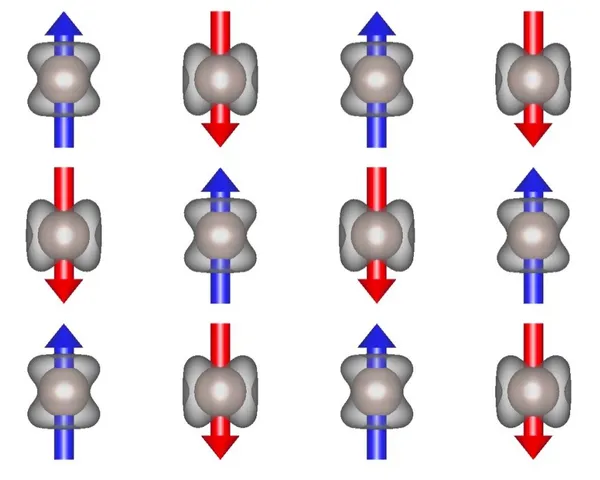
On July 24, the European Physical Society announced three researchers receive the 2026 Europhysics Prize for discovering altermagnetism, a third fundamental class of magnetic order that combines zero net magnetization with spin-polarized electronic properties.
All four LHC experiments have found signs of quark-gluon plasma in oxygen and neon collisions — a state of matter previously thought to require heavy ions like lead.
Applying intense pressure to tantalum disulfide raises its superconducting temperature threefold and boosts electron participation sevenfold, revealing new insights into unconventional superconductivity.
LSU physicists have built the first room-temperature quantum material that can distinguish and route different quantum states of light — a breakthrough that could reshape photonic quantum computing.
Researchers have observed ray-like thermal transport in boron arsenide at room temperature for the first time, revealing wavelike heat waves that persist across micrometer distances and fan into directional patterns dictated by the crystal's symmetry.
Scientists discovered that deep-sea pressure squeezes carbon and nitrogen from sinking organic particles, providing an unexpected food source for microbes and potentially rewriting how the ocean's carbon cycle works.
The CMS Collaboration has released results from the largest sample of beauty mesons ever analyzed, delivering the most precise measurement yet of CP violation in the decay of the B0s particle.
Scientists have filmed DNA unzipping at atomic resolution, revealing helicase uses ATP as an 'entropy switch'—a universal mechanism with direct implications for designing antiviral and anticancer drugs.
The LHCb Collaboration has observed the final member of a family of particles theorised over half a century ago, closing an important chapter in heavy-flavour spectroscopy.
Commonwealth Fusion Systems released five peer-reviewed papers today in a bid to show the scientific community that its 400-megawatt ARC fusion power plant is built on proven physics, not optimism.
After a productive extension, Run 3 at the LHC concluded in early July 2026. The machine now enters Long Shutdown 3 for a major upgrade.
The ATLAS Collaboration has observed a new excited meson, bringing the tally of hadrons discovered at the LHC to 84.